
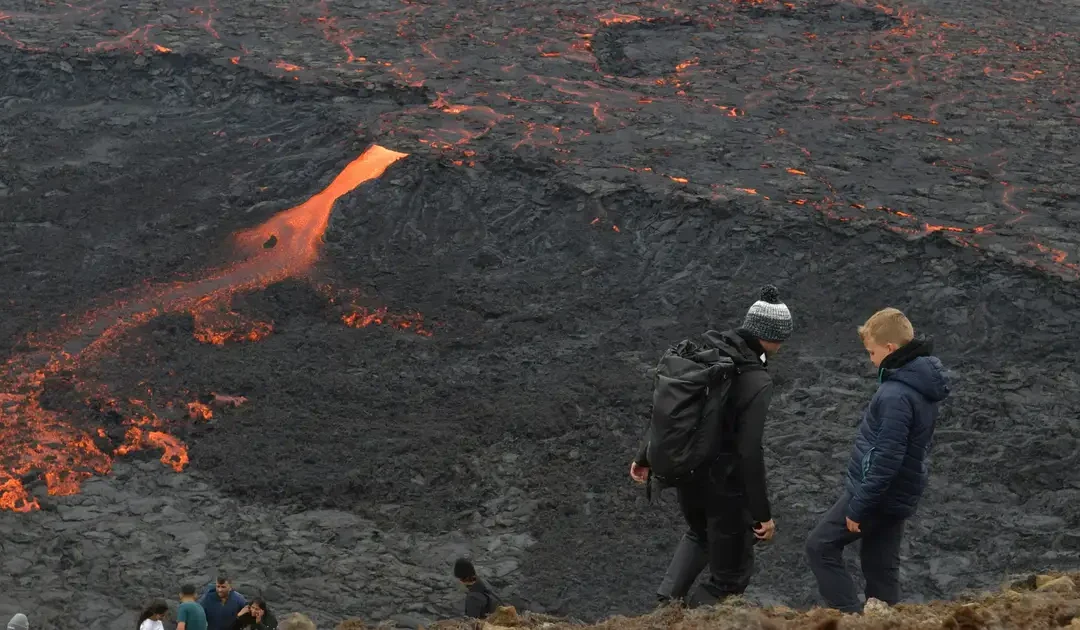
A geology tour at Travelling Iceland is a private trip designed by a PhD geologist, for the kind of traveller who wants to understand what they’re looking at, not just photograph it. Iceland’s volcanoes, glaciers and lava fields stop being scenery and start telling a story, read by local guides who see the land the way a geologist does.
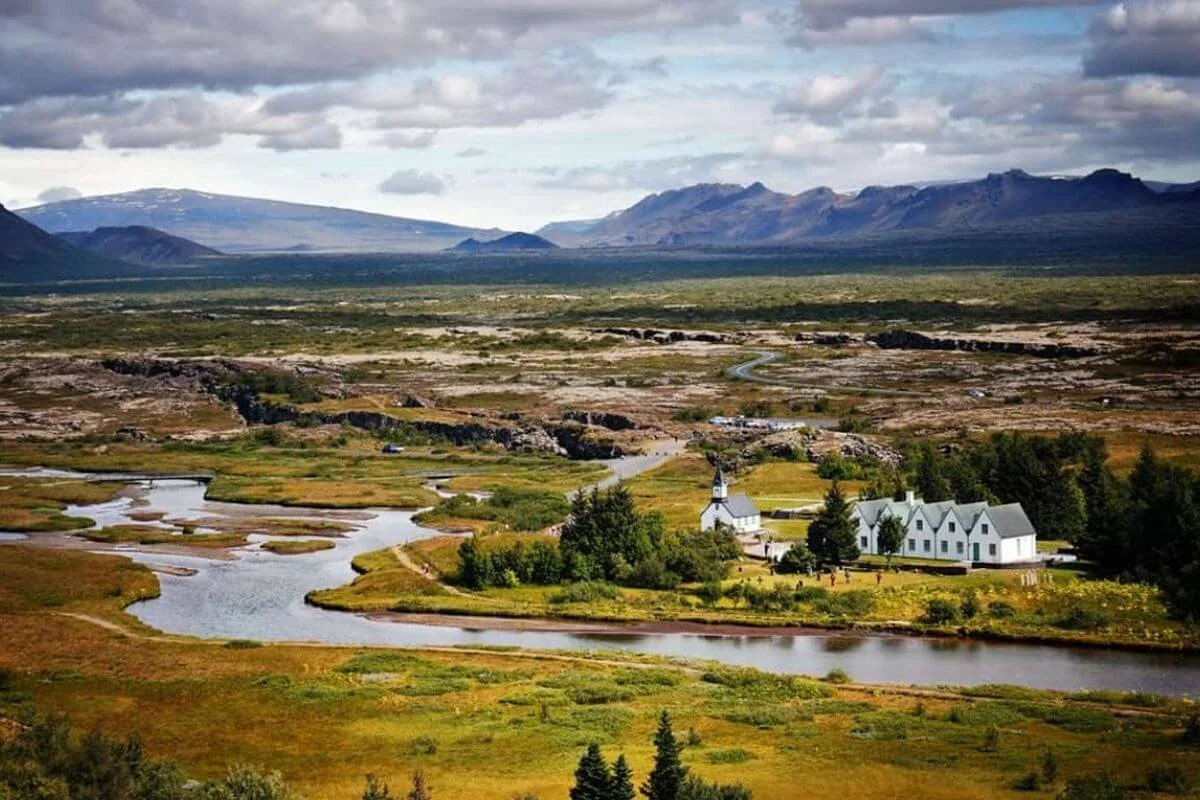
There’s a moment that happens on almost every Travelling Iceland geology tour. A guest is standing in Thingvellir National Park, looking at the Almannagjá rift valley. They’ve seen the photos online. They know it’s called the place where you walk between continents.
Then the guide explains what that means. The North American and Eurasian plates aren’t simply drifting apart, they’re building new ocean floor as they go. The ground beneath Iceland is younger than most of the rock in your garden at home.
The guest goes quiet. Then they start asking questions.
That shift, from looking at a landscape to understanding it, is what separates a geology tour from every other kind of tour in Iceland. It happens when the itinerary is designed by someone who has spent a career studying the very processes that shaped the ground you’re standing on, and guides who carry that same depth into the field with you.
Enquire about a private geology tour →
An Introduction to Iceland’s Unique Geology
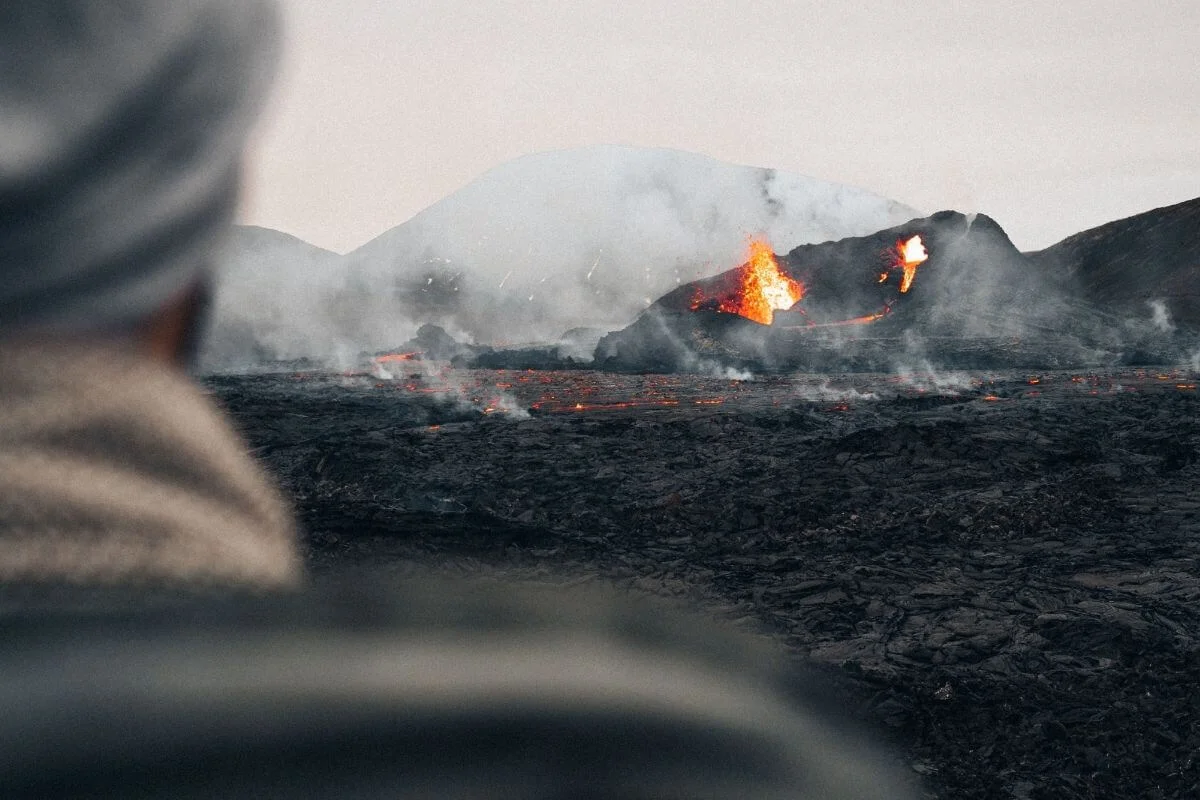
Iceland is one of the youngest landmasses on Earth. The island first rose above the ocean between 16 and 18 million years ago, built up entirely from volcanic activity. For comparison, parts of the Scottish Highlands hold rock close to 3 billion years old. Iceland is, geologically speaking, a newborn.
The island sits at the meeting point of two forces. The Mid-Atlantic Ridge, where the Eurasian and North American plates pull apart, one tectonic plate riding slowly west and the other east, and a deep mantle hotspot beneath the island that feeds its volcanic activity. Neither force alone would produce what Iceland is. Together they created a landscape that is still being built, actively, measurably, in your lifetime.
This is the story at the heart of the geology of Iceland, and it’s the through-line of every trip we design.
The oldest rock in Iceland, found in the Westfjords and the eastern fjords, is around 16 million years old. The lava field outside Reykjavik at Rauðhólar is far younger, some of it formed within the last few thousand years. When you cross Iceland, you cross different chapters of the same ongoing story, written in basalt.
Take the lava fields on Reykjanes, some of the youngest ground in the country and raw enough to look like another planet. Most tours pass them on the way to somewhere more famous. On a geology-designed trip they’re a stop in their own right, because lava this recent tells you what the island is doing now, not just what it did a million years ago. Reykjanes also sits right on the boundary in the North Atlantic where the island is being pulled in two.
The difference between a scenic tour and a geology tour is not the places you visit. Same roads, same waterfalls. What changes is you, and the way you’ll see a landscape for the rest of your life.
What a PhD geologist changes about your Iceland trip
Travelling Iceland was founded by Helga Bára Bartels Jónsdóttir, a professional geologist with a doctorate in micropaleontology. Her research focused on past climatic and oceanic changes, the microscopic fossil record preserved in rock and sediment that tells us what the Earth’s climate looked like thousands and millions of years ago.
Helga designs every itinerary and expertly trains the guides who deliver them. That matters, because it means geological depth is built into the framework of the trip itself.
When most guides explain a geyser, they describe how it works. Water seeps through permeable rock, heats up from volcanic activity below, erupts when steam pressure builds. Accurate, and also the same explanation on every information board in the country.
The Travelling Iceland version connects that same geyser to the geothermal system heating 90% of Iceland’s homes. It reads the mineral deposits around the vent for what they reveal about water temperature and chemistry below the surface. It explains why Geysir, the geyser that gave all geysers their name, stopped erupting regularly in the 20th century and what shifted. The information board tells you what. A geologist-designed tour tells you why, and what it connects to at large.
This applies across the whole landscape.
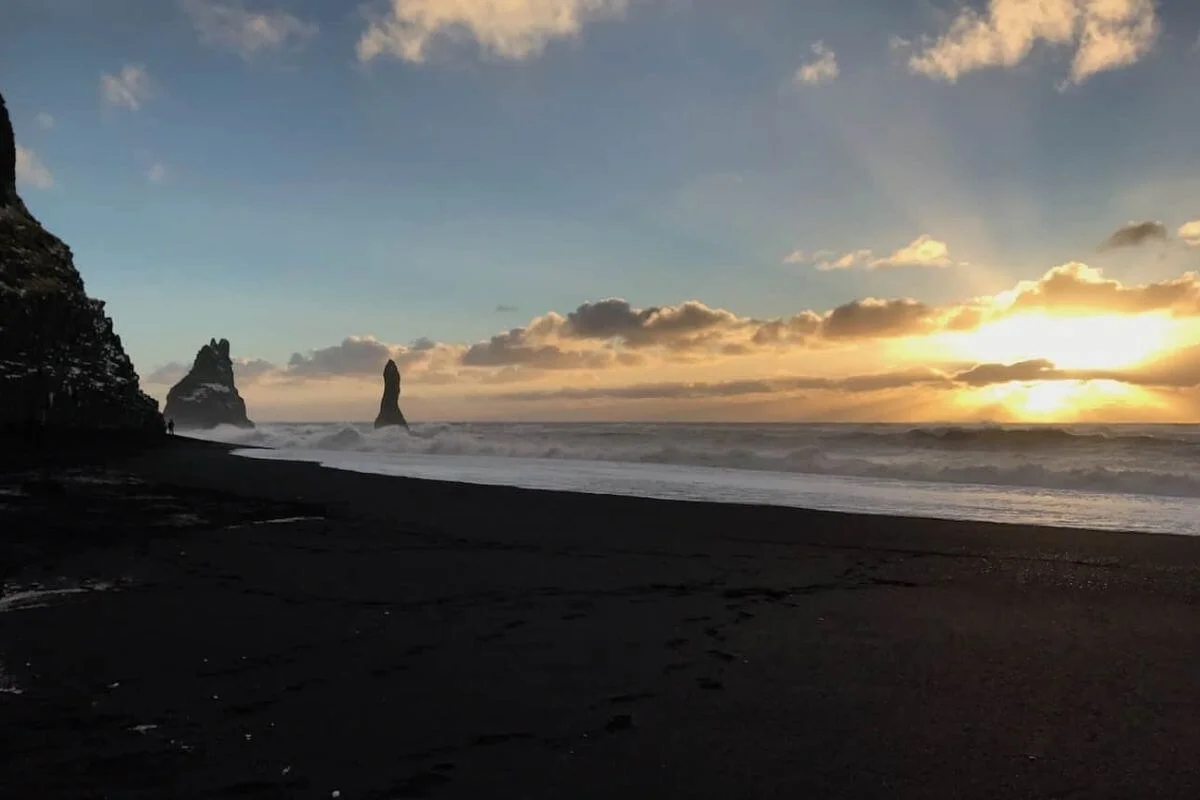
The black sand at Reynisfjara on the South Coast is pulverised basalt, ground down by some of the most powerful waves in the Atlantic. The lava tubes you can walk through in parts of Iceland formed when the outer crust of a lava flow cooled and hardened while molten rock kept moving inside, then drained away and left a hollow tunnel.
Fresh lava flows, old crater rims, a fissure opened by a recent eruption, the volcanic eruption still legible in the rock, the slow rise of magma towards a magma chamber, these aren’t separate curiosities. Plate tectonics ties them into one system, and Iceland is geologically active enough that you can watch it happen. This is a volcanically active island where a volcano erupted on Reykjanes more than once in recent years, and a short drive away a dormant volcano sits quiet for now.
Enquire about a private geology tour →
The volcanism, glaciers and places that only make sense with geology
The Golden Circle, the South Coast, the Snæfellsnes Peninsula. These are Iceland’s best-known routes, and for good reason. The geology here is extraordinary.
Gullfoss, the waterfall that anchors the Golden Circle, drops into a canyon carved by glacial floods, and it’s a short hop from Strokkur and from Thingvellir National Park, a UNESCO World Heritage Site that also happens to be the rift itself. But these are the routes every operator covers, which means most guests see them against a backdrop of other groups.
The difference on a private geology tour is not just smaller numbers. It’s pace and depth. With a private guide and your own vehicle, you stop when something is worth stopping for, not when the schedule says to. A lava field that looks unremarkable from the road can hold an hour of conversation if the person explaining it can read what it means. The volcanism, the glaciers, the mud pools bubbling in a geothermal field, they only cohere when someone frames them for you.
On Reykjanes you can walk the plate boundary itself, the seam where the North American and Eurasian plates pull apart, and see the stretch marks left in the rock as the two move in opposite directions. Europe on one side, America on the other, and you standing in the gap.
From there the itinerary reaches places most visitors never hear about, a quiet sea-fed soak at Hvammsvík that we send guests to instead of the big-name lagoons, a glacier hike on ice that was thicker in living memory, or a summer puffin colony out in East Iceland well off the standard circuit. They’re not hard to reach, just not on the route everyone else is driving.
Iceland has around 30 active volcanic systems and is spreading apart at roughly 2.5 cm a year. Understand that, and the whole island stops being a set of views and starts being one connected, living system.
When you understand those connections, the geothermal energy heating nearly every building in the country, the glacial rivers, the glacier that was longer a generation ago, the landscape stops being a collection of impressive views and becomes something you can read. That’s what a geology-designed tour of Iceland offers. Not more stops. Not better photo spots. A way of seeing that stays with you after you leave.
What to expect on a private geology tour of Iceland
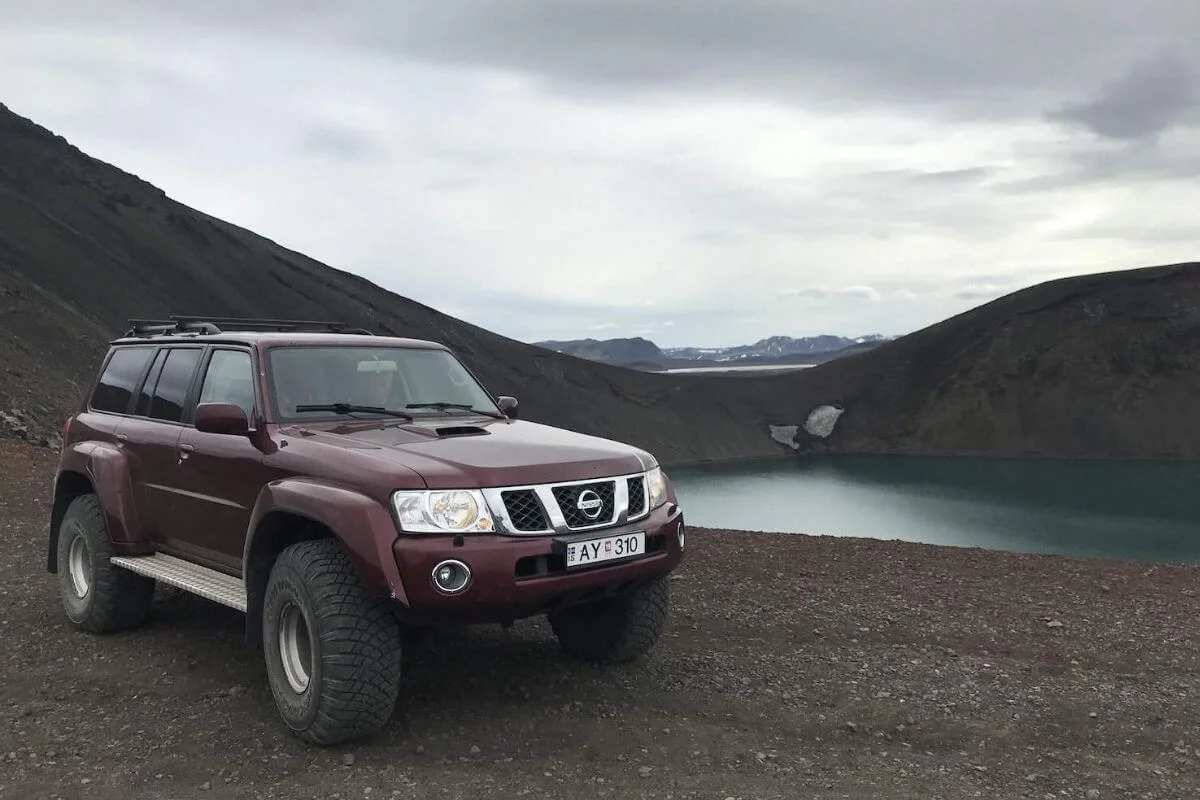
Travelling Iceland’s private Iceland tours are private by design. No other groups, no fixed schedule that can’t bend, no guide with another group to reach by noon. Every itinerary is built around your interests and pace from the start. Whether you picture slow, contemplative days or full-on adventure geology tours across the highlands, the trip is shaped to your group.
Most guests spend between two and seven days with us. Single-day tours cover the key formations around the Golden Circle or Reykjanes. Multi-day trips reach the Snæfellsnes Peninsula, the Westfjords, or the highlands, regions where the geology is equally remarkable and the crowds are not. These longer trips are focused on the geological landscapes most itineraries skip, and once someone teaches you to read them, the geological landscapes that are inescapable to a geologist become impossible for you to unsee.
Helga designs the itinerary and selects the guide for your specific group. Her team are educated, certified local guides who work to the same geological framework she applies to every trip, which means you know who you’re travelling with before you arrive, and the depth of knowledge you came for doesn’t vary based on who’s in the vehicle.
The pace of a geology tour is slower than a sightseeing tour. That’s not a drawback, it’s the point. You’re not trying to cover Iceland. You’re trying to understand a part of it, learning about the formation of the many unique landscapes that make the island what it is.
Our tours are intended for people who want that, whether they arrive as enthusiastic geologists with a real interest in geology of their own, or have never thought about rock in their lives and leave wanting to know more.
It’s an educational tour that never feels like one, closer to a field trip led by the smartest person you know than a lecture. Both kinds of guests are exactly right for this kind of trip. However you like to explore Iceland, the point is to leave understanding it.
Ready to see Iceland the way a geologist does?
Whether it’s your first time in Iceland or a return to go deeper, if you want an Iceland trip where you learn about the geology under your feet, talk through what a geology-focused itinerary might look like for your group and contact us directly. We build every trip from scratch, and because we’re a local company, every booking also supports conservation work in Iceland.
Enquire about a private geology tour →
Frequently Asked Questions
Do I need a background in geology to enjoy an Iceland geology tour?
Not at all. Most guests on our geology-focused tours have no scientific background. The Travelling Iceland team are practised at explaining geological concepts in plain language, the kind that makes you feel like you understood something real, not like you sat through a lecture. Guests without a geology background often ask the best questions.
Will Helga be my guide on a geology tour?
Helga designs every itinerary and selects the guide for your group, but she’s not the guide in the vehicle on most trips. Travelling Iceland has a team of educated, certified local guides who work to the geological framework Helga has built for each itinerary. You’ll know who your guide is before you arrive. If having Helga personally matters to your group, mention it when you enquire and we’ll discuss what’s possible.
What makes an Iceland geology tour different from a regular private tour?
The itinerary is designed around geological features rather than scenic highlights alone, and the pace is slower, with more time at each stop for explanation and conversation. Many of the places we visit are the same ones other operators cover, but what you take away from them is different. A geology tour adds the layer of understanding that turns a beautiful trip into one you can explain when you get home.
How long does a geology-focused Iceland tour typically last?
We offer single-day tours focused on specific regions, the Golden Circle or the Reykjanes Peninsula, as well as multi-day expeditions. For real depth on Iceland’s geological story, we recommend a minimum of three days. The highlands, the Westfjords, and the Snæfellsnes Peninsula each hold geological landscapes distinct from the south coast and worth building time around.
What is micropaleontology and why does it matter for a tour?
Micropaleontology is the study of microscopic fossils, the tiny organisms preserved in rock and sediment that record what Earth’s climate looked like across geological time. Helga’s doctoral research focused on past climatic and oceanic changes. In practice, it means the itinerary connects Iceland’s current volcanic and geothermal activity to its deep climate history, a layer of interpretation most private tour operators in Iceland cannot offer.
Do you visit the Golden Circle, Gullfoss and Strokkur?
Yes, and they earn their reputation. Gullfoss is a glacial-fed waterfall dropping into a canyon the ice itself carved, and Strokkur erupts every few minutes beside the original Geysir. On a private trip we time them to sidestep the coach crowds and give you the geological backstory, not just the viewpoint. Thingvellir National Park, a UNESCO World Heritage Site part of the rift, completes the classic loop.
Do geology tours include the Blue Lagoon or a glacier hike?
We usually steer guests past the famous Blue Lagoon towards quieter geothermal water like Hvammsvík, though a visit to the Blue Lagoon can be arranged if your group wants it. A glacier hike works beautifully on a geology itinerary, ice is one of the forces still reshaping this volcanically active island, and standing on a glacier that has retreated in living memory makes climate change concrete in a way no chart does.
Can geology tours be adapted for families with children?
Yes. Geology becomes a different kind of experience for younger guests, more tactile, more surprising, and often more memorable than they expect. Understanding that the ground on Reykjanes is pulling apart lands differently at age 14 than at 45. The pace and explanation adjust to the group, and families with curious teenagers in particular get a great deal from a geology-focused itinerary.
Recent Comments