
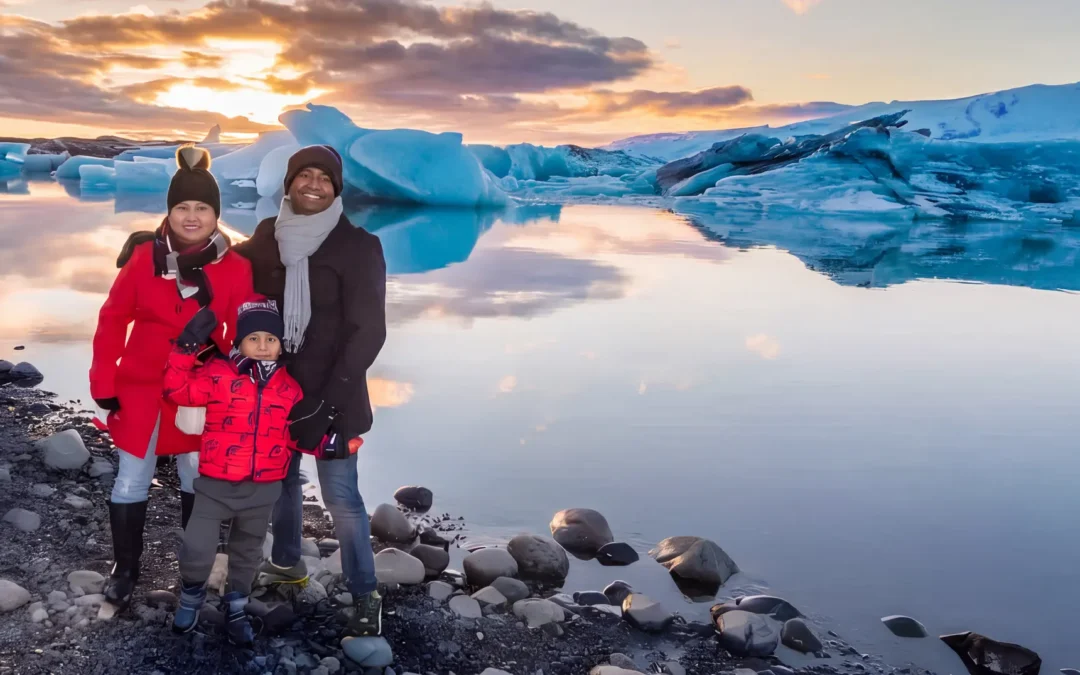
Iceland with kids works best on a private trip designed by a PhD geologist at Travelling Iceland, so the science becomes the fun part instead of a lecture. It’s also easier than parents expect: Iceland is the world’s safest country, most major sights have no minimum age, and geysers, walkable lava tubes, and black sand beaches create core memories that will last a lifetime.
Most parents planning their first trip to Iceland with kids have the same underlying fear: that the logistics will overwhelm the experience. The cold. The driving distances. The unknown. Those are real considerations in Iceland, and the right guide removes almost all of them, not by simplifying the trip, but by designing around the specific rhythms of your family.
Iceland has ranked as the world’s safest country every year since 2008, according to the Global Peace Index. It has no dangerous wildlife, clean tap water everywhere, and road infrastructure that makes navigating straightforward even in winter.
The practical baseline for travelling with kids is already high. What a private tour adds to that foundation is a guide who has prepared specifically for your family, who knows your 8-year-old is obsessed with volcanoes and your 5-year-old needs a slow start to every morning, and who built the itinerary accordingly.
This article covers the things to do in Iceland that land with children, what parents most commonly worry about, and how Travelling Iceland designs a family trip to Iceland you’ll cherish for decades to come.
Start planning your Iceland family trip →
Why Iceland is a fantastic destination for children and families
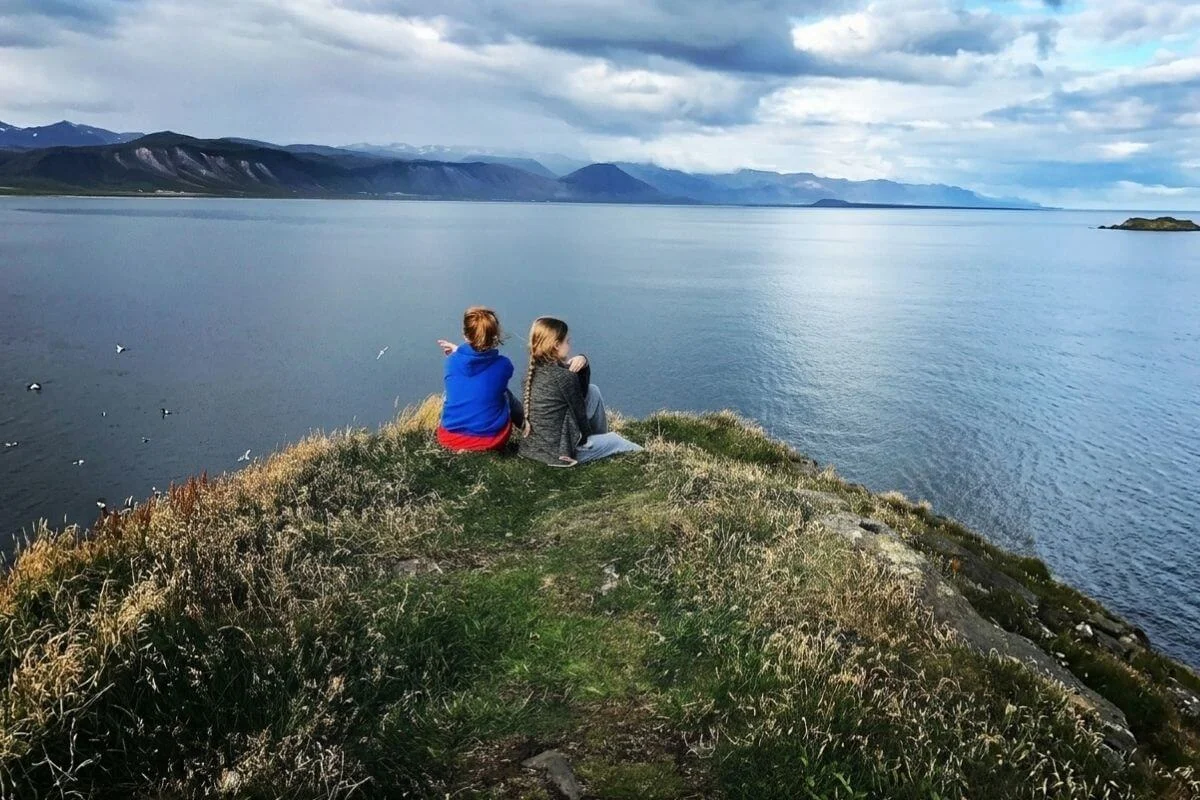
The most powerful thing about Iceland for children is that it is visibly alive. Geysers erupt every few minutes on a predictable schedule. Strokkur, at the Geysir geothermal area and the most-watched stop on the Golden Circle, shoots boiling water 15 to 20 metres into the air, and sometimes higher, reliably, every 6 to 10 minutes. A 6-year-old can watch it build, erupt, and reset, and watch it again, all from a safe distance.
Then there’s Gullfoss, the waterfall you feel in your chest before you see it. Thingvellir National Park (Þingvellir) on the Golden Circle, where you can walk through the rift valley marking the boundary between two tectonic plates. In summer, puffins nest on the sea cliffs, close enough for a child to watch without ever disturbing them.
None of this requires a long attention span or prior knowledge. It requires a guide who knows how to time the day, what to say at each stop to make the 7-year-old’s eyes widen, and when to move on before the energy drops. That last skill is as important as any knowledge of the geology.
Iceland doesn’t need to be simplified for young children. It needs to be paced for them. Here’s what we mean.
How to pace a family trip to Iceland
The most common parent complaint after an Iceland group tour isn’t the weather or the cost, it’s that they felt rushed. “We barely had time to look before moving on.” “The kids were exhausted by lunch.” “I wish we’d spent the whole morning at the glacier instead of 45 minutes.”
These complaints describe a structural problem: group tours are optimised for coverage, not for the pace that makes an experience stick. A 5-year-old needs time to stand at the edge of a waterfall and just be there. A 9-year-old who is fascinated by the lava formations needs 20 extra minutes to ask questions. A group tour cannot give them that. A private guide, designing the day around your specific family, can.
Every Travelling Iceland itinerary is built around your family. The objective is never to tick a list of locations. For families with young children, this translates to fewer stops, longer time at each one, and a guide who reads the room and adjusts without needing to consult a schedule.
Start planning your Iceland family trip →
Should you self-drive the Ring Road when travelling with kids?
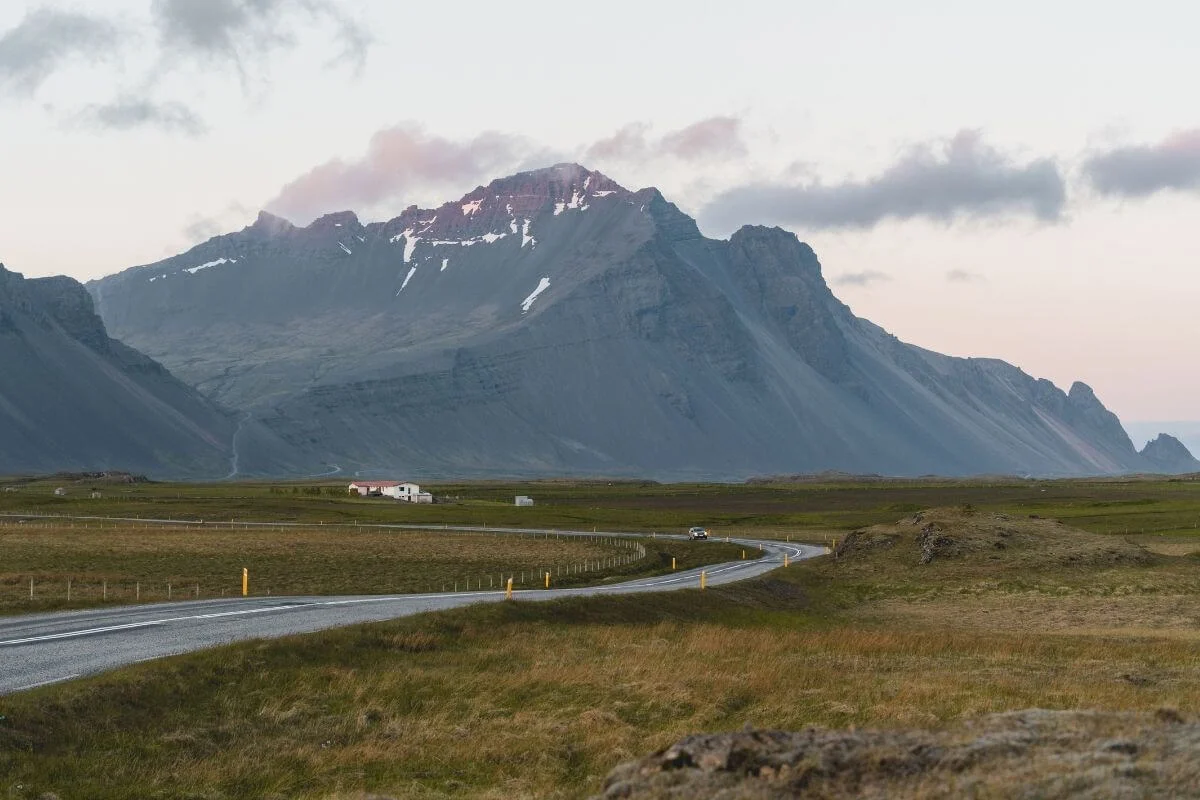
Plenty of families first picture an Iceland road trip with kids: rent a 4×4, loop the Ring Road, stop where you like. It’s a real option, and for some trips it works. With young children it usually doesn’t, and it’s worth being honest about why.
Driving in Iceland means changeable road conditions, gravel stretches, one-lane bridges, wind that shoves a tall vehicle around, and a weather forecast that can rewrite your day by breakfast. On a self-drive road trip, managing all of that becomes the parent’s full-time job, which means the parent watching the road is not the parent answering “why is the sand black” from the back seat.
A private trip on the Ring Road flips that. Someone else watches the road conditions and the forecast, reroutes when the weather turns, and narrates what you’re passing. You get to watch your kids instead of the map. For many families who want to be present and make memories with their children, off-loading the stress of driving and itinerary stops is the most valuable thing they can do.
What a guide trained by a PhD geologist gives young children on a family holiday
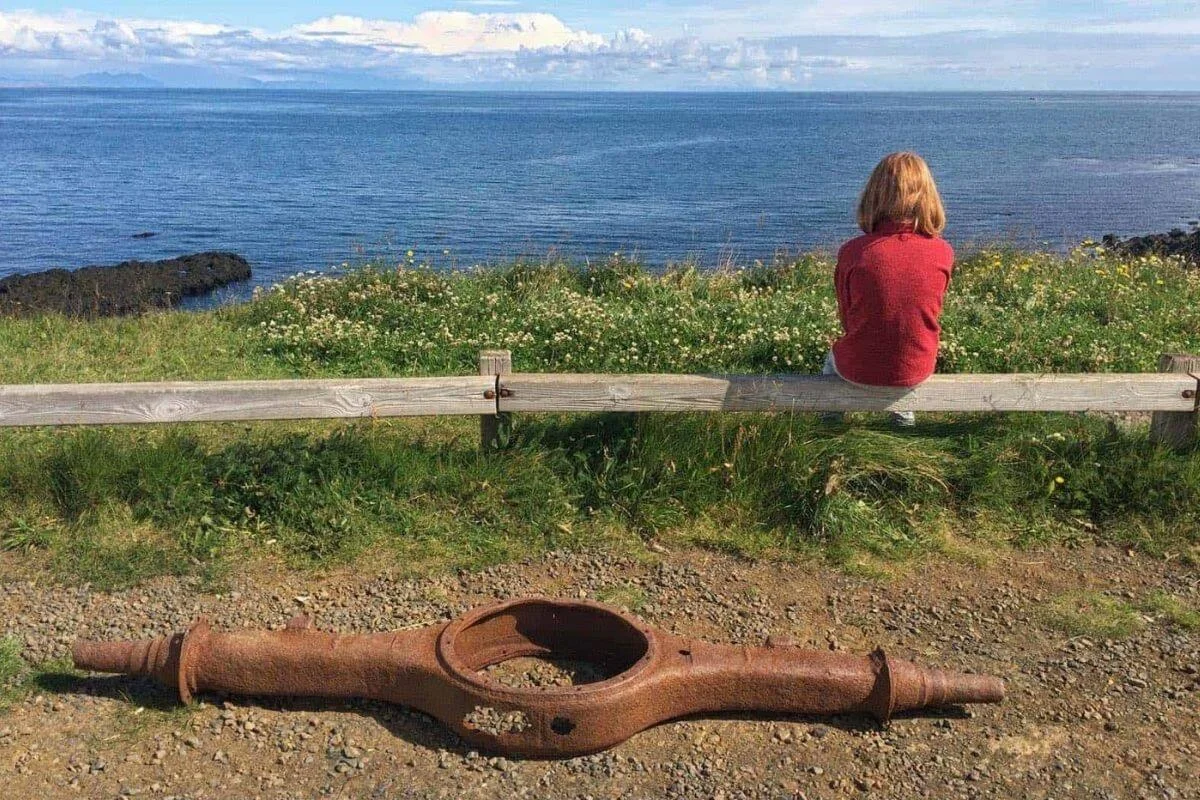
Young children ask questions constantly. “Why is the sand black?” “Why does the water come out hot?” “Why does that rock have holes in it?” Most tour formats don’t have the time or the guide depth to answer those properly.
A private guide trained by Helga Bára Bartels Jónsdóttir, who holds a doctorate in micropaleontology with emphasis on past climatic and oceanic changes, can answer every one of them, and knows how to pitch the explanation to a 6-year-old rather than a postgraduate.
Helga designs every Travelling Iceland itinerary and trains the guide team to her standard.
Start planning your Iceland family trip →
Practical things parents ask before booking an Iceland family itinerary
- Is Iceland too cold for young children?
Iceland’s average summer temperature (June–August) runs between 10–15°C (50–59°F). It’s cool, windy, and changeable, but not extreme in summer. The key is layering: thermal base layers, waterproof outer shells, and good boots. A 7-year-old in the right gear is comfortable at every major site. Your guide will advise on what each day requires before you set out.
- What are the minimum ages for activities?
Most of Iceland’s iconic sights, geysers, waterfalls, sand beaches, glacier lagoons, geothermal pools, and lava tubes, have no age limit and work for children of any age. The ones with a real minimum: glacier hikes on foot are typically 10+, Silfra snorkelling is 14+, and snowmobiling is 6+ as a passenger. Your guide designs the activity mix around who’s in your group, so nothing lands on the itinerary that doesn’t fit your children’s ages.
- How long can young kids manage in a vehicle?
Iceland’s distances between major sites often require 1–2 hours of driving. For young children, a private vehicle turns drive time into part of the experience: your guide narrates what you’re passing, answers the questions that come up, and stops when something worth stopping for appears.
- What’s the best time to visit Iceland with young kids?
Iceland in summer (May–August, the long summer months) is the most straightforward: mild weather, very long daylight hours, and no ice on the roads. For families where the children are 8 or older and the parents want a chance at the Northern Lights, the shoulder season (September–October and March–April) is a good time to visit while the weather is still manageable. Winter (November–February) suits older children better, with short daylight, colder conditions, and more demanding logistics.
What young kids remember about Iceland
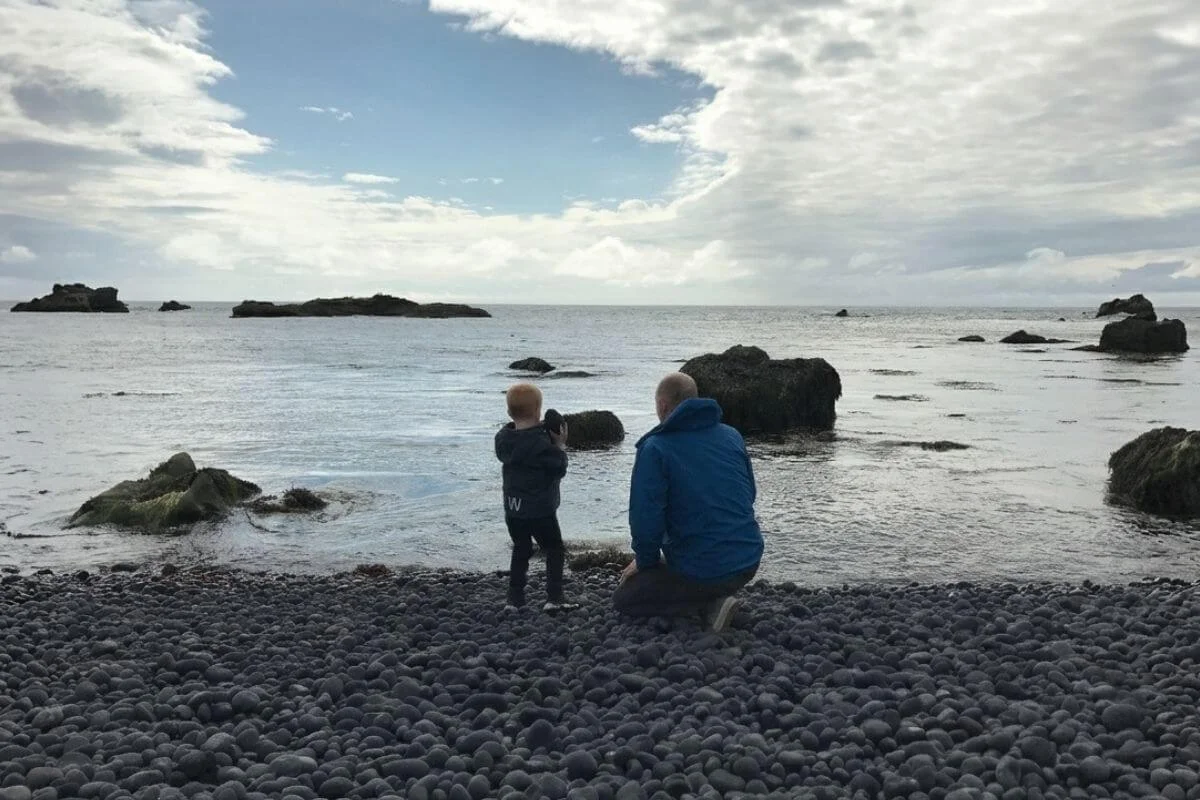
Imagine your eight-year-old standing thirty metres inside a lava tube, the passage about the width of a hallway, the walls still holding the shape of rock that stopped flowing more than 5,000 years ago. The guide asks everyone to turn off their headlamps. For ten seconds there is a dark your child has never met, no glow under a door, no streetlight through a curtain, and in that black the guide explains this tunnel was carved by fire and has been sitting here since long before the first person reached Iceland.
Ask what their kids still talk about and it is almost never the stop they’d circled in advance. What comes up is small and physical and a little surprising: the ground that stayed warm through their boots, the spray off a waterfall catching them mid-sentence, the horse that walked straight up to the fence to say hello.
The families who book a second time, often with the same kids a year or two older, are the proof. They visited Iceland once, saw it shift how their children looked at the world, and came back for more of it.
How to plan a trip to Iceland with kids
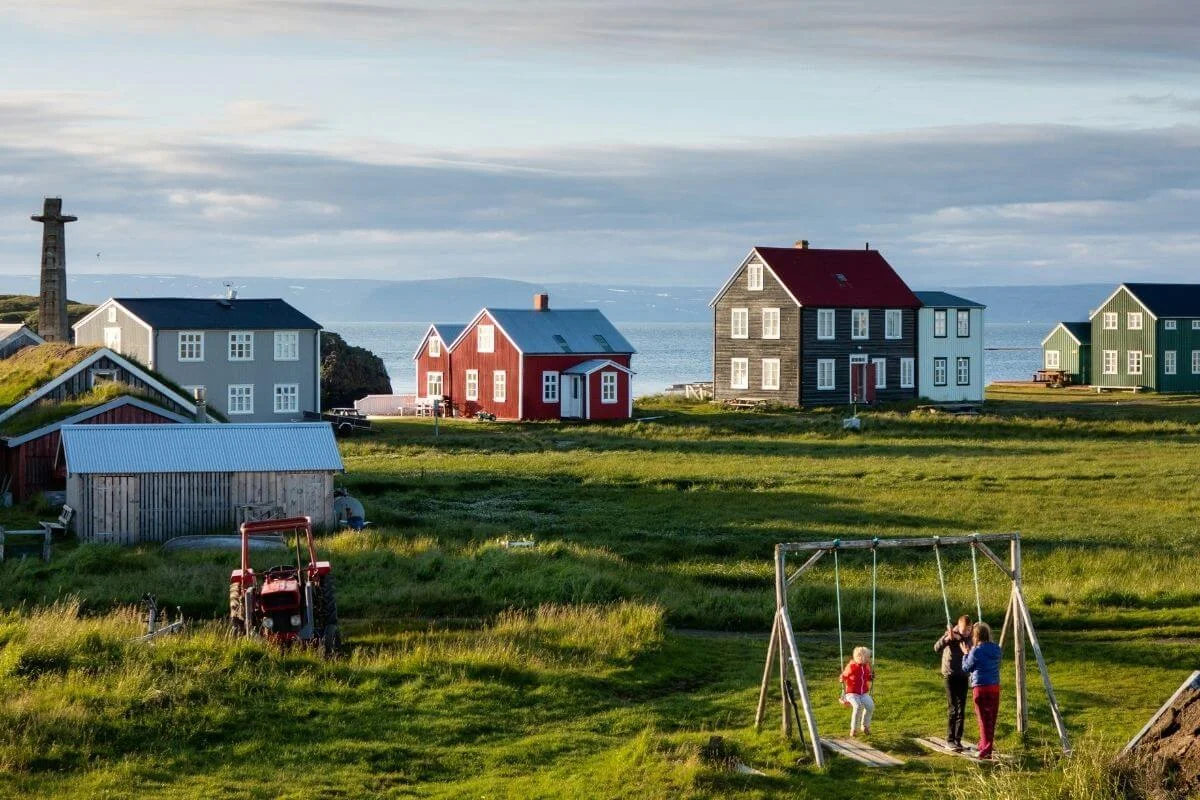
A Travelling Iceland enquiry for a family with young children begins the same way as any other: with a conversation about who’s travelling and what success looks like for each person.
- Start with where you’ll base. When planning your family route, most families who visit Iceland with kids for the first time land at Keflavik Airport, base near Reykjavik, and reach the south coast and Golden Circle from there on day trips. With more days you can push into south Iceland’s glacier country, up to north Iceland, or out to the Snaefellsnes peninsula, the region often called “Iceland in miniature” for how much it packs into one drive, returning to Reykjavik or a countryside hotel each night.
- Go in summer if you can. Long daylight, warmer temperatures, and fully accessible roads make June–August the most forgiving time of year for young kids. If your children are 8 or older and seeing the Northern Lights matters to you, the September–October and March–April shoulder season is worth considering. That said, Christmas and New Year’s Eve in Iceland can be magical, too.
- Tell the team exactly who’s coming. A 5-year-old obsessed with horses and a 10-year-old who wants to know why volcanoes exist need different emphasis in the same itinerary. Younger kids and older kids can absolutely share a trip, the private format is what makes that work. The more specific you are about ages and interests, the better the days are built.
- Plan at least 5 days. Four days is possible but leaves no margin for weather changes or spontaneous extra time at a site your kids can’t leave. Five to seven days allows for the pacing that makes the trip feel unhurried.
For every trip booked, Travelling Iceland plants a native birch tree through Kolviður, part of a wider responsible travel commitment that includes asking every guest to take the Icelandic Pledge. The family holiday leaves the country a little better than it found it.
Ready to start planning your family travel?
A family trip to Iceland with young children takes a bit more preparation than a trip for adults, and the experience on the other side is something most families describe as one of the best they’ve ever taken together, whatever their children’s ages.
Start planning your Iceland family trip →
Frequently Asked Questions
Is Iceland a good destination for young children ages 5–12?
Yes, and more manageable than most parents expect. Iceland ranks consistently as the world’s safest country, has clean tap water everywhere, and most major natural attractions have no minimum age. The geysers, waterfalls, lava tubes, horse farms, and glacier lagoons all work well for this age range. The main practical requirement is good weather gear and a guide who understands how to pace a day around a young child’s energy, not a preset schedule.
What are the best things to do in Iceland with kids?
The Golden Circle is the easiest first day: Strokkur geyser, Gullfoss waterfall, and Þingvellir national park, where you can walk through the rift valley formed by the boundary between the North American and Eurasian plates. The south coast adds Reynisfjara beach and its black sand near Vík. Then there’s the water. A hot spring you can sit in while it snows outside. The Secret Lagoon, a natural geothermal pool near the Golden Circle that stays warm all year.
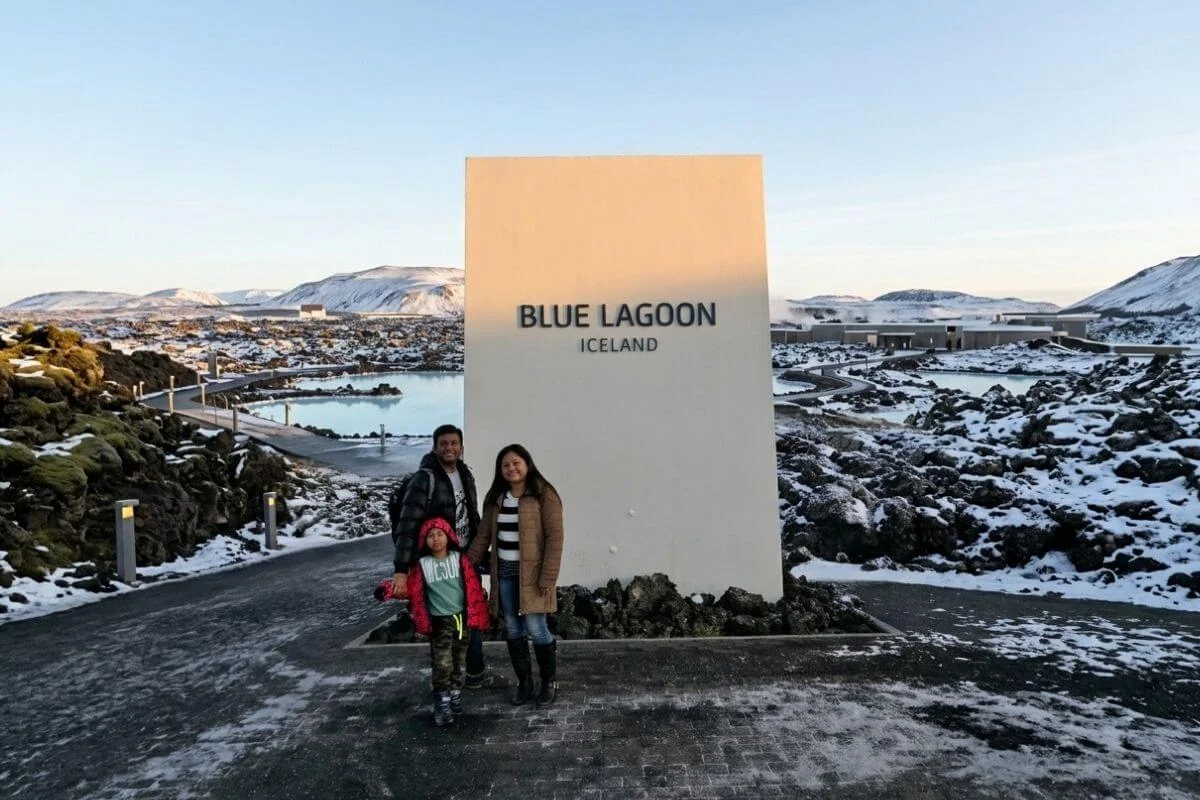
Even a municipal swimming pool in Reykjavik earns its place, most have a shallow play area and warm pots, and a warm pool is about the most kid friendly end there is to a cold, tiring day. The Blue Lagoon is the famous one, and it’s fine, but with young kids the quieter local pools and the geothermal pools out in the countryside are often the better call.
Is it worth doing an Iceland road trip with kids, or a private tour?
A self-drive Ring Road road trip works for some families, but with young children the driving in Iceland, gravel, wind, one-lane bridges, and fast-changing road conditions, tends to swallow the whole trip. A private trip on the Ring Road hands the road and the forecast to someone else, so the driving becomes narration instead of stress and you spend the day with your kids rather than the map.
What’s the best time to visit Iceland with kids?
Summer (June–August) is the most straightforward for Iceland with children aged 5–12: mild temperatures, very long daylight hours, and fully accessible roads. The shoulder season (April–May and September–October) offers fewer crowds and is still workable with the right gear. Winter (November–February) suits older children better, given shorter daylight hours, colder conditions, and more variable driving conditions.
Can younger kids and older kids do the same Iceland trip?
Yes. A preset group tour has to aim at a median across 20 strangers, so younger kids get dragged and older children get bored. A private itinerary flexes for both in the same day: a slower morning for the little ones, a glacier hike or a deeper geology stop for an older child in the afternoon. Travelling with kids of mixed ages is one of the strongest cases for going private.
How long should we plan for an Iceland trip with young children?
Five to seven days is the recommended minimum for a private family trip with children aged 5–12. Four days is possible but leaves no margin for weather flexibility or the slower pace young children need to absorb each stop. A well-built 5-day itinerary with deliberate pacing will produce a more memorable experience than a packed 4-day trip that rushes through the same locations.
Is Reynisfjara beach safe for little ones?
Reynisfjara beach is one of Iceland’s most beautiful stops and one of its few with a real safety note: sudden “sneaker” waves can surge far up the black sand without warning. It’s completely fine for young kids with an adult who knows to keep well back from the waterline, which is exactly the kind of local knowledge a private guide brings. It’s a good example of why travelling to Iceland with kids is easier with someone who knows each site.
Do I need to worry about the cold with young children in Iceland?
Iceland’s summer temperatures (June–August) run between 10–15°C (50–59°F), cool and changeable, but manageable with proper layering. The key is waterproof outer layers, thermal base layers, and sturdy boots. Your guide will advise on what each day requires before departure. Most outdoor experiences work well in this temperature range, and geothermal pools provide a warm option on any day that feels too cold for extended outdoor activity.
Recent Comments