
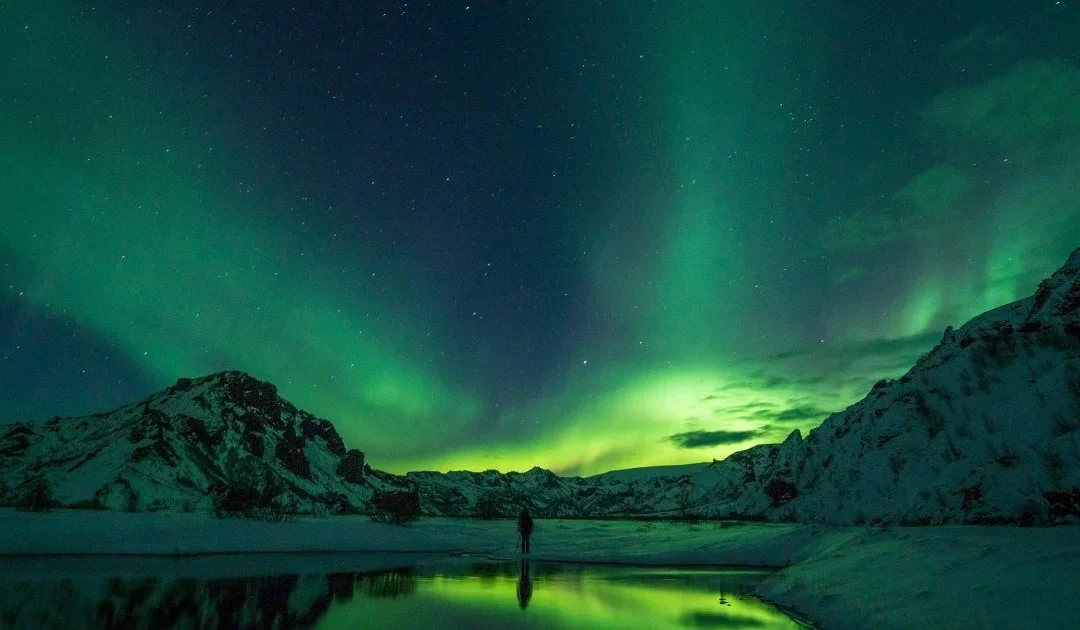
Christmas and New Year in Iceland with Travelling Iceland means a private, fully guided winter trip built around the season’s highlights: the thirteen Yule Lads of Icelandic folklore, Reykjavík’s midnight fireworks, the Northern Lights in the darkest weeks of the year, and a founder who is a PhD geologist behind every itinerary.
The sun comes up late here in late December, closer to half past eleven, and it never climbs far. For four or five hours it moves in a low arc across the south, and the light stays the colour of a long sunrise the whole time: gold on the snow, blue in the shadows. Then it slips away by half past three, and the sky gives itself over to the dark that makes everything else about this season possible.
That magical darkness is the reason why many choose to celebrate the holidays in Iceland. It’s when the Northern Lights are visible, the fireworks over Reykjavík sparkle, and the reason a candle in a window means something.
Travelling Iceland is based here, in Reykjavík, and Christmas and New Year are one of our favourite times of the year — and the unexpected stretch of the year our guests often rave about most.
This guide is what we would tell you over a coffee before you booked your holiday in Iceland: what the season feels like, what to look for in the best private trips, and how to plan a Christmas in Iceland your family will remember for decades to come.
Ready when you are. Send us your dates and who is travelling, and we will create a private Christmas and New Year trip around your family. Tell us about your trip.
Why Christmas and New Year is the most atmospheric time to visit Iceland
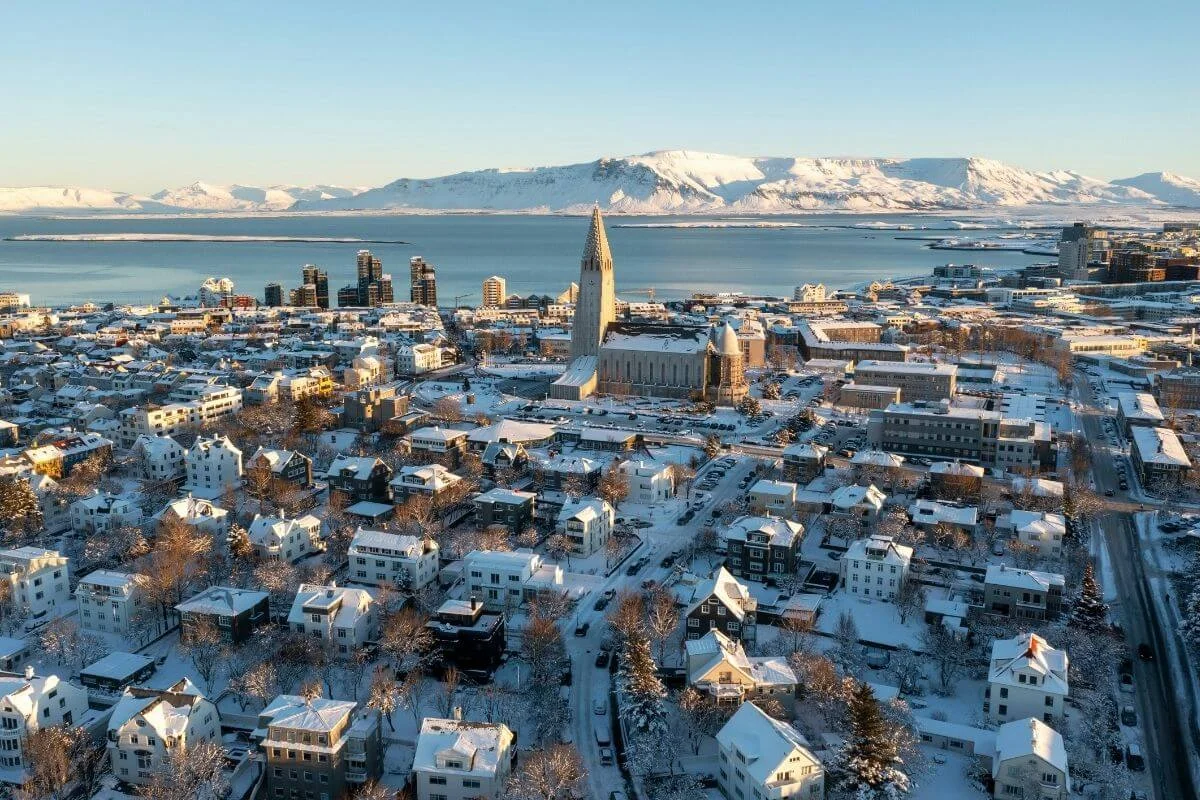
Around the winter solstice on December 21, Reykjavík gets roughly four to five hours of daylight, with the sun rising close to 11:20 and setting around 15:30. On New Year’s Eve the sun is up a little longer, and the light is already beginning its slow return.
Short days might sound like a limit, but in reality, it’s this soft light and quiet darkness that lulls guests in. A private Iceland trip in winter can take the good light when it comes, and use the long evenings for all the wonderful activities that require darkness.
Chief among those is the aurora. The best Northern Lights season runs from roughly September to April, because you need real darkness to see it, and Christmas and New Year land in the heart of that window. Add a working capital city in full festive swing, Icelandic families keeping centuries-old customs, and a New Year’s Eve unlike anywhere else, and you have a week that rewards travellers who want to understand a place rather than tick it off their bucket list.
Icelandic Christmas traditions: the thirteen Yule Lads
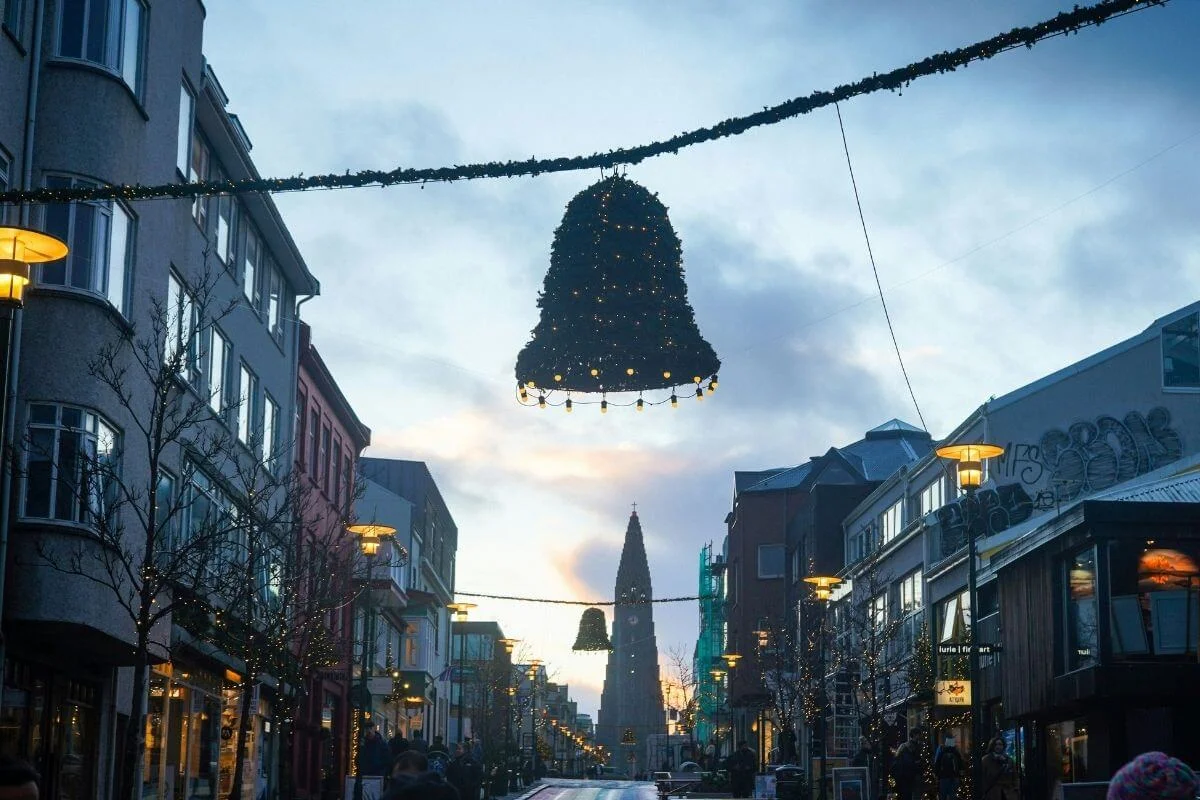
Icelandic Christmas is older and stranger than the tinsel version most visitors expect, and knowing how families here celebrate Christmas changes how the whole trip feels.
There is no single Santa here. There are thirteen Yule Lads, the Jólasveinar, mischievous brothers who come down from the mountains one at a time over the thirteen nights before Christmas, starting on December 12.
Children leave a shoe on the windowsill each night, and wake to a small gift if they have been good or a raw or rotten potato if they have not. Their names describe their habits, from the Sheep-Cote Clod who bothers the sheep to the Candle-Stealer who arrives on Christmas Eve. Their mother is Grýla, an ogress said to come looking for badly behaved children, and the family keeps the Yule Cat, the Jólakötturinn, a huge black cat that goes after anyone who has not been given a new piece of clothing for Christmas.
None of this is invented for tourists. The Yule Lads were frightening enough that a law in 1746 restricted using them to scare children, and the version families know today was fixed by a 1932 poem. The season proper begins at six in the evening on Christmas Eve, December 24, when church bells ring across the country and Icelandic families sit down to their main Christmas meal. It does not fully end until Þrettándinn, the thirteenth day, on January 6, when the last Yule Lad heads back to the mountains and bonfires and small fireworks send the season off.
A guide who grew up with all of this can tell you which farm the Sheep-Cote Clod belongs to in the old stories while you drive past the kind of turf-roofed valley the tales came from. That is the difference between seeing Iceland in December and understanding it.
Christmas markets and Christmas food in Reykjavík
For the days before December 24, Christmas in Iceland belongs to the capital. The Christmas celebrations open with the tree lighting on Austurvöllur on the first Sunday of Advent, a spruce sent to Reykjavík each year by the city of Oslo, and from then the city runs several Christmas markets through the season.
The main one sits at Ingólfstorg in the old Kvosin district, where an ice rink has drawn skaters since 2006, and the stalls on Austurvöllur sell glögg, Christmas beer, and roasted almonds while the Yule Lads wander through. A short drive south, Hafnarfjörður turns its whole town centre into a Christmas Village at Thorsplan square, the longest-running festive market in the capital region, with Grýla and her sons making weekend appearances for the children. Christmas lights go up in late November and stay lit well into the new year, so even the short afternoons glow.
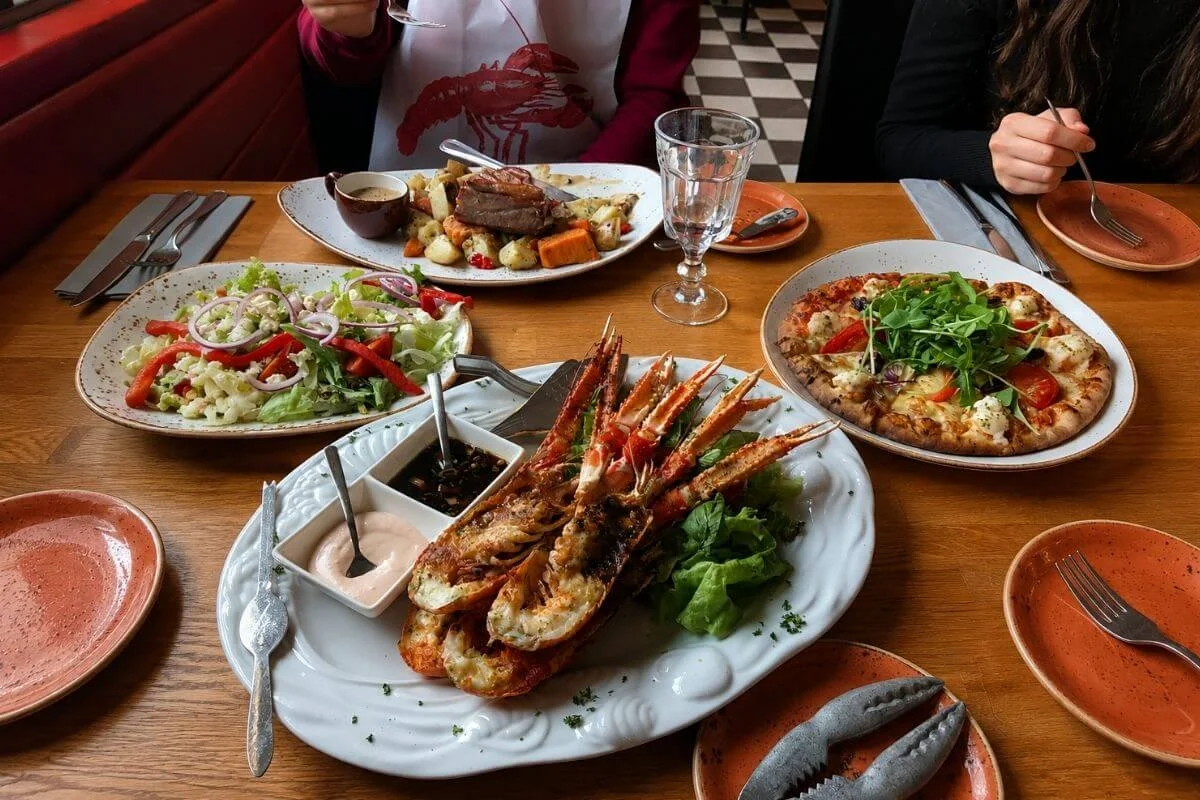
Icelandic food around the holidays is reason enough to plan a visit. Restaurants and hotels lay on jólahlaðborð, the Icelandic Christmas buffet, from late November, tables of smoked lamb, cured salmon, pickled herring, and laufabrauð, the thin leaf bread that families cut into fine patterns and fry crisp together in the weeks before Christmas.
On Christmas Day, families gather for long lunches built around hangikjöt, the smoked lamb that anchors the table. And on Christmas Eve most Icelanders give and receive books, then spend the night reading them, a custom called the jólabókaflóð, the Christmas book flood. A guide can point you to the buffet worth booking and the market stall worth the detour, and fold an evening of it into your trip.
The festive weeks fill first. Hotels, guides, and New Year’s Eve tables go months ahead, so the earlier you reach out, the better we can plan your perfect Iceland holiday. Start planning.
New Year’s Eve in Reykjavík
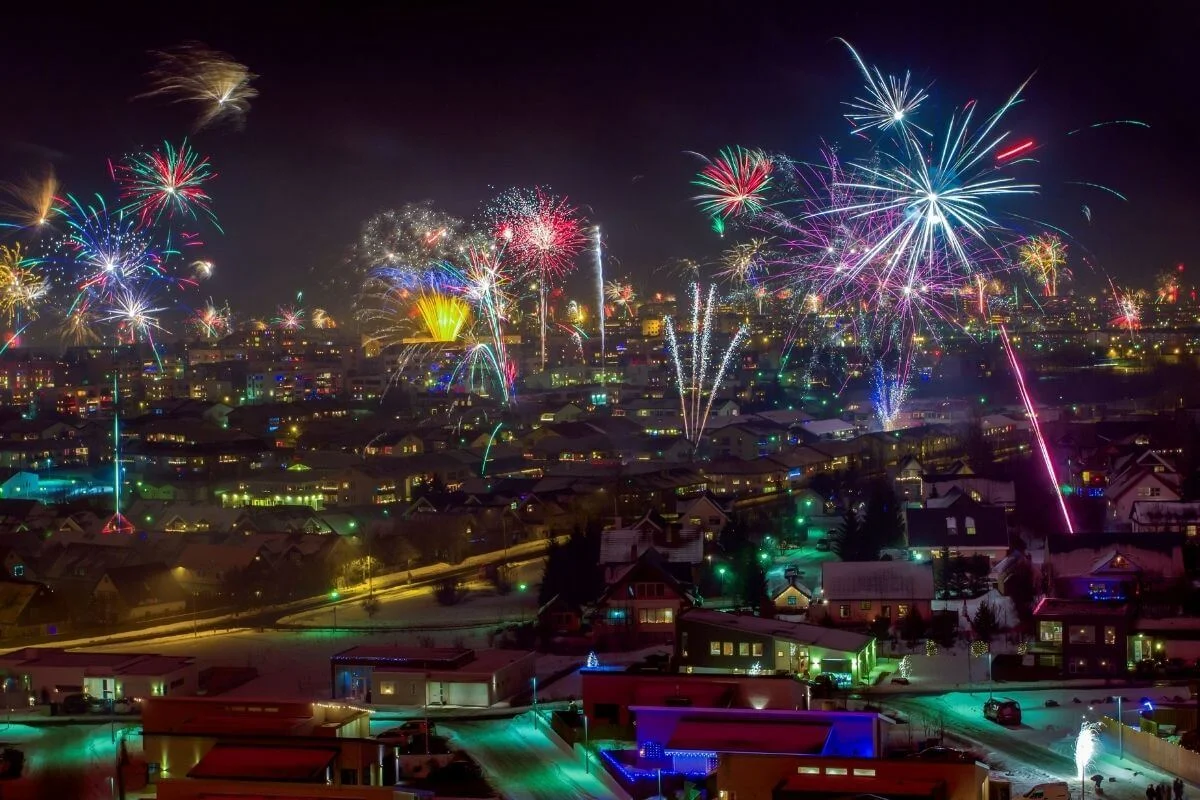
If you have one night to spend in Iceland, make it December 31.
The evening has a rhythm. First the bonfires. Communities light around ten New Year’s Eve bonfires, the áramótabrenna, across Reykjavík, most of them around half past eight, and neighbours gather in the cold to sing and stand in the heat of the flames. Then almost everyone goes indoors for Áramótaskaupið, a satirical review of the year on national television that so much of the country watches at once that the streets are briefly empty.
Half an hour before midnight they come back out, and the sky does something you will not see in another capital. There is no official municipal display. Icelanders buy their own fireworks from stalls run by ICE-SAR, the volunteer Icelandic Association for Search and Rescue, and the sale is the single biggest fundraiser of the year for the teams who pull travellers and locals out of storms, off mountains, and away from the sea.
So at midnight the fireworks go up from gardens and streets and hilltops in every direction at once, a full circle around you rather than one show to face, and they keep going for the better part of an hour. Every rocket you watch paid for a rescue volunteer’s rope or radio. Some of the best viewing is up near Hallgrímskirkja, the church that anchors the city’s skyline.
The Northern Lights in Iceland’s darkest weeks
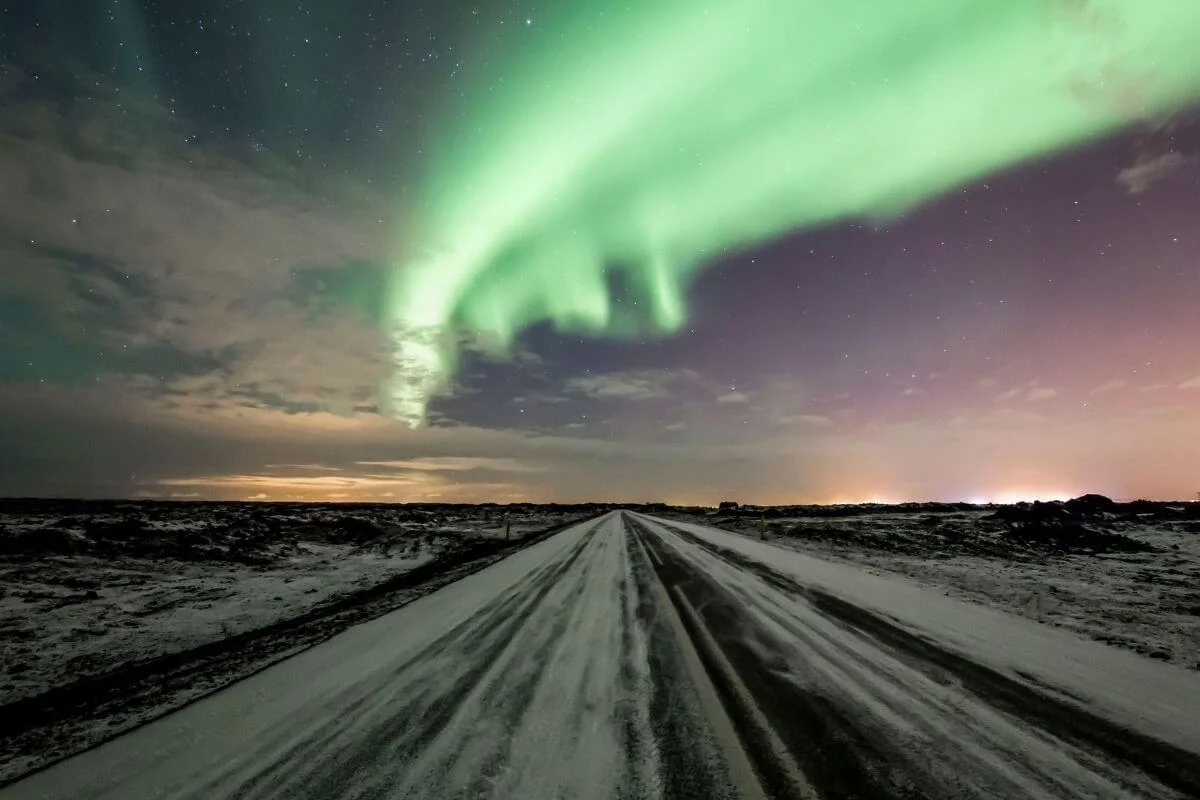
The aurora is never a guarantee. It needs a clear sky, some solar activity, and darkness. What Christmas and New Year give you is the darkness, in long supply, right when you are here anyway.
That said, a private Iceland tour increases your chances of sighting the aurora. A guide watching the forecast can move you towards a hole in the cloud, wait out a quiet hour, or head back out at eleven at night when the sky finally clears, because the only group whose evening is affected is yours.
The aurora is charged particles from the sun meeting the gases in our upper atmosphere, funnelled in by the planet’s magnetic field, and the colours tell you which gas and how high. A guide trained to explain that gives your evening a second dimension beyond the folklore, though the folklore is worth hearing too.
As one guest put it in a review, her Travelling Iceland guide’s knowledge as a geologist meant they did not just see the landscape, they understood it. That standard runs through the whole team, and through our conservation work off the road too.
Every trip starts with a conversation. Tell us what matters to your family and we will come back with a private itinerary shaped around them. Get in touch.
Two private Iceland Christmas tours: the 5-day and 7-day trips
Two private itineraries anchor the festive season, and both are fully guided. They are the most popular shapes a Christmas and New Year trip takes with us, and both bend to fit your family and the pace you want.
The 5-day New Year and Northern Lights trip is the aurora-and-New-Year’s-Eve core, arriving December 29 and out on January 2, and it works well as a focused first winter trip. Our 7-day Christmas and New Year itinerary starts December 27, adds the Jökulsárlón glacier lagoon, and gives the week more room to breathe. Either way, you will know your guide before you arrive.
| 5-Day New Year & Northern Lights | 7-Day Christmas & New Year | |
| Dates | December 29 to January 2 | December 27 to January 2 |
| Best for | A focused first winter trip, aurora and New Year’s Eve | A fuller festive week with more range and slower pacing |
| Northern Lights | Private hunt on arrival, plus chances from your hotel | Private hunt on arrival, plus more countryside nights |
| Golden Circle | Yes, on New Year’s Eve day | Yes, with the Friðheimar greenhouse lunch |
| South Coast & Katla ice cave | Yes | Yes |
| Jökulsárlón glacier lagoon & Diamond Beach | Not included | Included |
| New Year’s Eve in Reykjavík | Yes | Yes |
| Reykjanes & Blue Lagoon | Yes | Yes |
What a private Christmas and New Year tour in Iceland includes: a sample itinerary
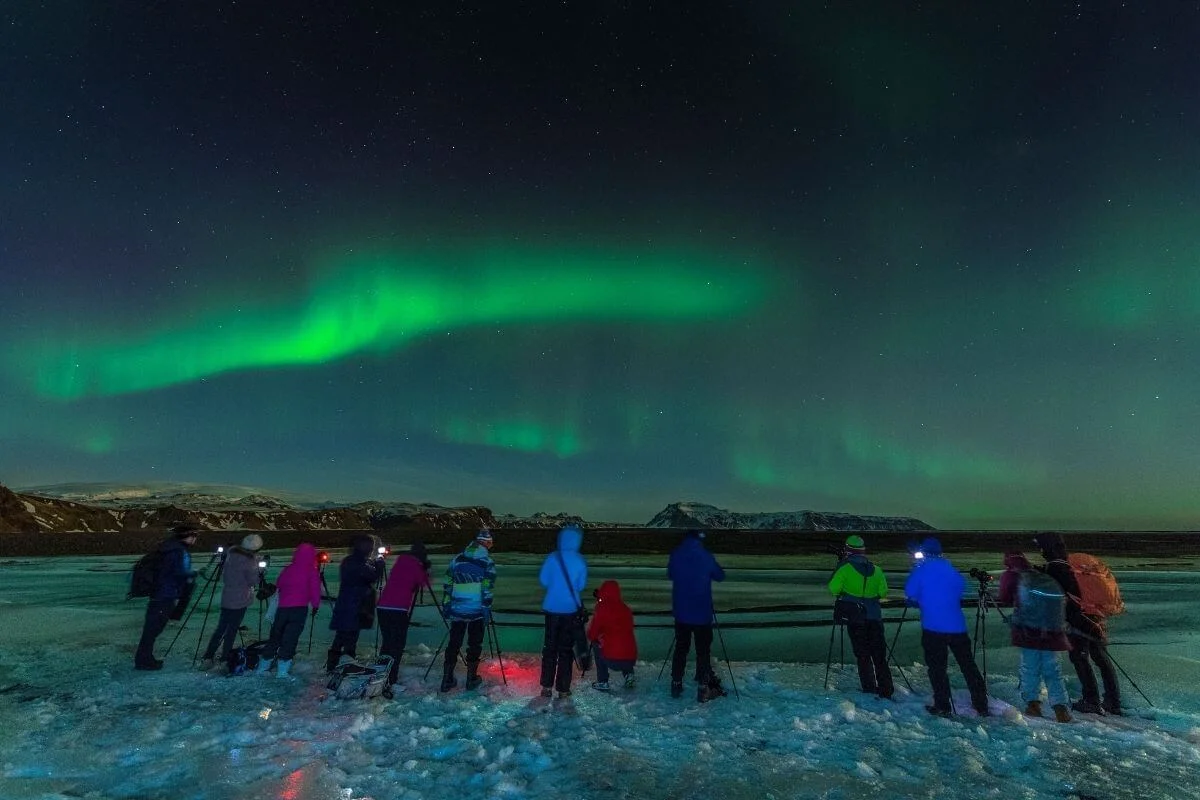
Here is how a festive week tends to unfold, a sense of what a private tour in Iceland can include over the holidays. The days move through the same landmarks that make Iceland famous in any season, with the winter version of each and a scientist’s reading of the ground underneath.
On the Golden Circle you stand at Þingvellir, in the rift valley that marks the boundary between the North American and Eurasian plates, and where Icelanders founded the world’s oldest parliaments in the year 930. Nearby, the Strokkur geyser erupts every five to ten minutes, sending water twenty to thirty metres up, and Gullfoss drops in two tiers into its canyon. A winter lunch at the Friðheimar greenhouse, warm and green while it snows outside, breaks up the day.
The South Coast strings together the waterfalls: Seljalandsfoss, sixty metres and, on days the ice path allows, one you can walk behind, and Skógafoss, another sixty-metre wall of water. Reynisfjara’s black sand and basalt columns sit under the cliffs of Dyrhólaey, with the Eyjafjallajökull volcano, the one that grounded Europe’s flights in 2010, on the skyline when the weather clears. Then a Super Jeep carries you out to the Katla ice cave.
That cave is the trip’s held breath. You pull on a helmet, a headlamp, and crampons, walk a few minutes into the glacier, and step inside a chamber where the ice glows a blue that no photograph quite carries, thousands of years in the making, the whole of it groaning and shifting around you as glaciers do.
On the seven-day trip the itinerary also reaches Jökulsárlón, the glacier lagoon where icebergs calve off Europe’s largest ice cap and drift out to sea, and the Diamond Beach where they wash back to shore and lie glittering on the black sand.
New Year’s Day tends to be gentler on both trips: the Reykjanes Peninsula geopark, with its bridge between the continents and Reykjanesviti, the oldest lighthouse in the country, and then a long soak in the Blue Lagoon, the Sky Lagoon, or the quieter Hvammsvík baths to start the year warm.
If you are reading this outside December, both trips are Iceland winter journeys at heart, and the Northern Lights season stretches from September to April, so the same landscape, the same private guiding, and the same ice cave work well beyond the festive window. Tell us your dates and we will shape a winter trip around them.
Quick tips to plan a private Christmas and New Year trip to Iceland
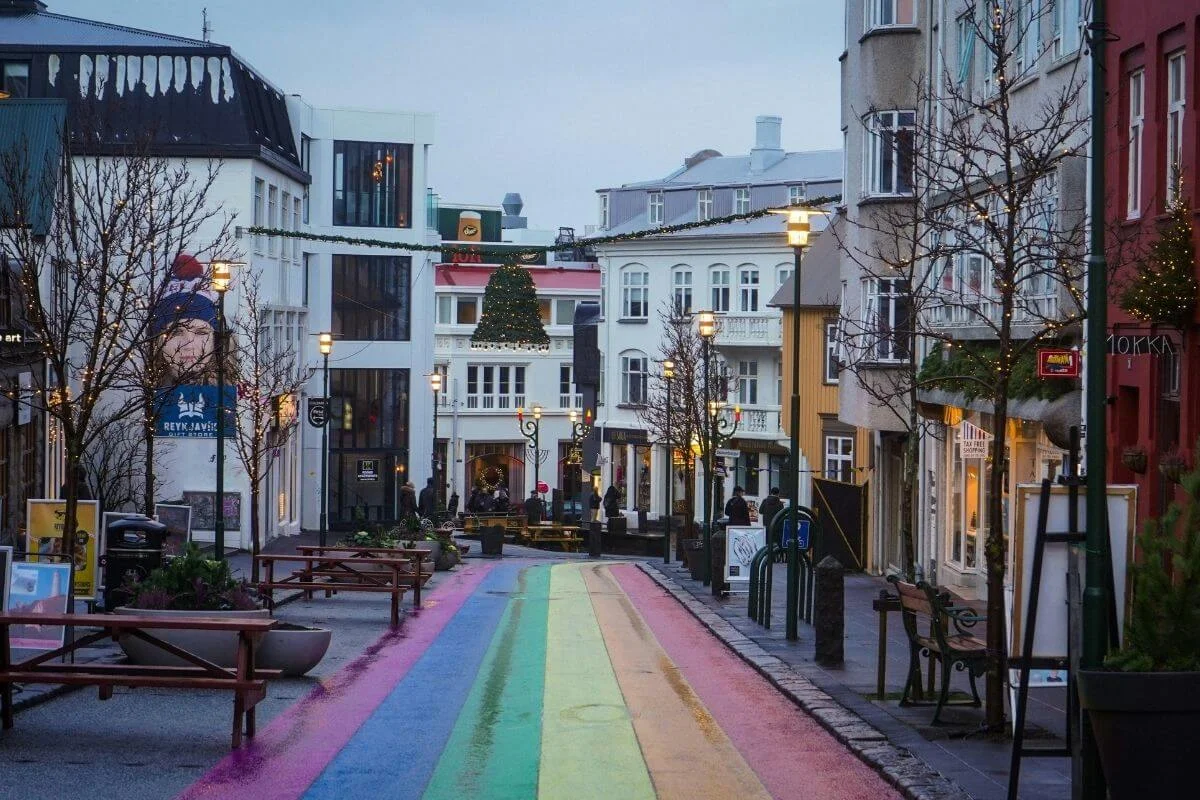
Book early. The festive weeks are the tightest of the winter. Hotels, guides, and the good New Year’s Eve tables go months ahead, so the earlier you start, the more of the trip can be built the way you want it.
Plan around the light. With four to five hours of daylight, a trip that tries to cram everything in will feel rushed and cold. We pace the festive itineraries to use the bright hours for the drives and the sights, and the long evenings for the aurora, the lagoons, and the city.
Pack for real winter. Layers, proper waterproofs, warm boots with grip, and something new to wear so the Yule Cat leaves you be. Your guide handles the crampons and safety gear for the ice cave.
Build it around your group. The whole reason to travel privately in this season is flexibility. You will know your guide before you arrive, and that guide can move the plan for weather, for a clear aurora sky, or for the pace your family wants.
Ready to plan your Christmas and New Year in Iceland?
Explore the 5-day New Year and Northern Lights trip and the 7-day Christmas and New Year itinerary to get a feel for each.
Travelling Iceland is a family-run boutique operator based in Reykjavík, founded by a PhD geologist and recognised with the TripAdvisor Travellers’ Choice Award in 2022, the Travel and Hospitality Award for Eco Friendly Tour Company of the Year in Iceland in 2024, and named Private Tour Operator of the Year at the LTG Europe awards in 2019.
Every itinerary we run is a starting point. Tell us who is travelling, when, and what matters to you, and we will come back with a private trip shaped around your family.
Tell us about your trip and we will take it from there to help you plan an Iceland holiday that’s exactly what you’re imagining.
Frequently Asked Questions
Is Christmas a good time to visit Iceland?
Christmas is one of the most atmospheric times to visit Iceland. Reykjavík and the towns are lit for the season, Icelandic families keep centuries-old customs like the thirteen Yule Lads, and the long nights sit inside the aurora season. Days are short, around four to five hours of daylight near the solstice, so a well-paced private trip that uses the light for sights and the dark for the Northern Lights gets the most from the season.
What is it like in Iceland during Christmas?
Iceland during Christmas is dark, lit, and unhurried. Towns glow with lights from late November, the days run to four or five hours, and the long nights carry the aurora, the markets, and centuries-old customs like the thirteen Yule Lads.
What is Christmas Eve in Iceland like?
Christmas Eve in Iceland is the heart of the season. Celebrations begin at six in the evening on December 24 with church bells and the main meal, and most families give and read books late into the night, a custom called the jólabókaflóð.
How do Icelanders spend Christmas Day?
Christmas Day, Jóladagur, is for family. Households gather for long lunches built around hangikjöt, the smoked lamb that anchors the table, and the visiting carries on through December 26.
What are the 13 days of Christmas in Iceland?
The 13 days of Christmas in Iceland are tied to the thirteen Yule Lads, who come down from the mountains one a night from December 12. They leave the same way after Christmas, the last heading home on January 6, the day Icelanders call Þrettándinn.
What is there to eat in Iceland at Christmas?
To eat in Iceland at Christmas is to try hangikjöt (smoked lamb), laufabrauð (thin leaf bread), cured salmon, and pickled herring. Many hotels and restaurants lay on jólahlaðborð, the Christmas buffet, from late November, the easiest way to sample it all.
Where are the best Christmas markets in Iceland?
The best Christmas markets in the capital are at Ingólfstorg in Reykjavík’s old Kvosin district, the stalls on Austurvöllur, and the Christmas Village at Thorsplan square in Hafnarfjörður, the longest-running of them. All three run through Advent to December 23.
Can you see the Northern Lights at Christmas and New Year in Iceland?
Yes, Christmas and New Year fall in the middle of Iceland’s aurora season, which runs from roughly September to April, and the long December nights give you more viewing hours than almost any other time. Sightings are never guaranteed because they depend on clear skies and solar activity, but a private guide who can chase gaps in the cloud and head back out when the sky clears meaningfully improves your odds.
What is New Year’s Eve like in Reykjavík?
New Year’s Eve in Reykjavík moves from community bonfires in the early evening to a national comedy broadcast, then to fireworks at midnight. There is no official municipal display. Icelanders buy their own fireworks from stalls run by the volunteer search and rescue teams, so at midnight the whole sky lights up from every direction at once for close to an hour, and the money raised funds the rescue crews who keep the country safe.
How many hours of daylight does Iceland get in late December?
Near the winter solstice on December 21, Reykjavík gets about four to five hours of daylight, with the sun rising close to 11:20 and setting around 15:30. The sun stays low, so the short day is filled with soft, golden light rather than a harsh midday glare, and the light begins lengthening again by New Year’s Eve.
What should I pack for Iceland in winter?
To pack for Iceland in winter, bring warm layers, proper waterproofs, and warm boots with good grip, plus something new to wear so the Yule Cat leaves you be. Your guide provides the crampons and safety gear for the ice cave.
Is a Christmas trip to Iceland worth it?
A Christmas trip to Iceland is worth it if you want the season with its real texture, the Yule Lads, the markets, the food, and the aurora in its darkest, longest window. A private trip to Iceland shaped around your family gets the most from the short days and long nights.
What is included in a private Christmas and New Year tour of Iceland?
Both festive trips are fully private and fully guided, and include airport transfers, all transport, a professional local guide, daily excursions, hotels with breakfast, the Ice cave, national park and parking fees, and taxes. The Blue Lagoon and a New Year’s Eve in Reykjavík are built in, and the seven-day trip adds the Jökulsárlón glacier lagoon. For current inclusions and to check dates, start with the 5-day or 7-day trip page, or send us your brief.
How far in advance should I book a Christmas or New Year trip to Iceland?
Aim to book the festive season several months ahead. Late December is the busiest stretch of the Icelandic winter, and private guides, the better hotels, and New Year’s Eve restaurant tables fill early. Booking sooner gives you more choice on hotels and more room to build the itinerary around your group rather than around what is left.
Recent Comments