
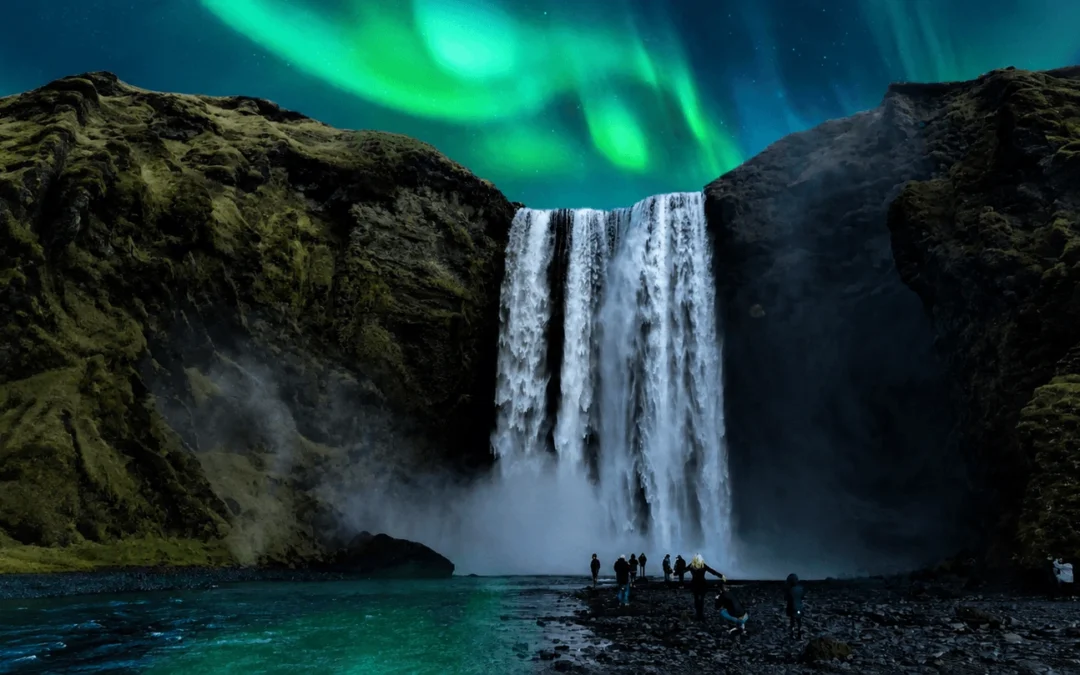
The best time to see the Northern Lights in Iceland runs from the end of August to the end of April, when nights are dark enough for the aurora to appear. The darkest months give the longest nights, and clear skies and solar activity decide the rest. Travelling Iceland is Iceland’s only founder-scientist private operator.
You’ve seen the photograph. A green ribbon poured across a black night sky, a small figure standing under it, and a caption swearing the camera didn’t do the Northern Lights justice. Honestly? It never does.
If you’re flying to Iceland to stand under that sky and witness the Aurora Borealis yourself, you’ll want to arrive when the odds are in your favor. Nobody can promise you the aurora, but a good guide can help you plan for the nights when your chance of seeing it is highest.
Travelling Iceland was founded by a geologist who reads a winter sky the way most of us read a weather app, and that’s the whole difference between hoping and planning.
A private trip is built around the forecast and our local, insider expertise, so your guide can drive to wherever the sky is clear, even as the clouds sit over the car park.
Plan your private Northern Lights trip with the best Iceland guides.
What are the Northern Lights, actually?
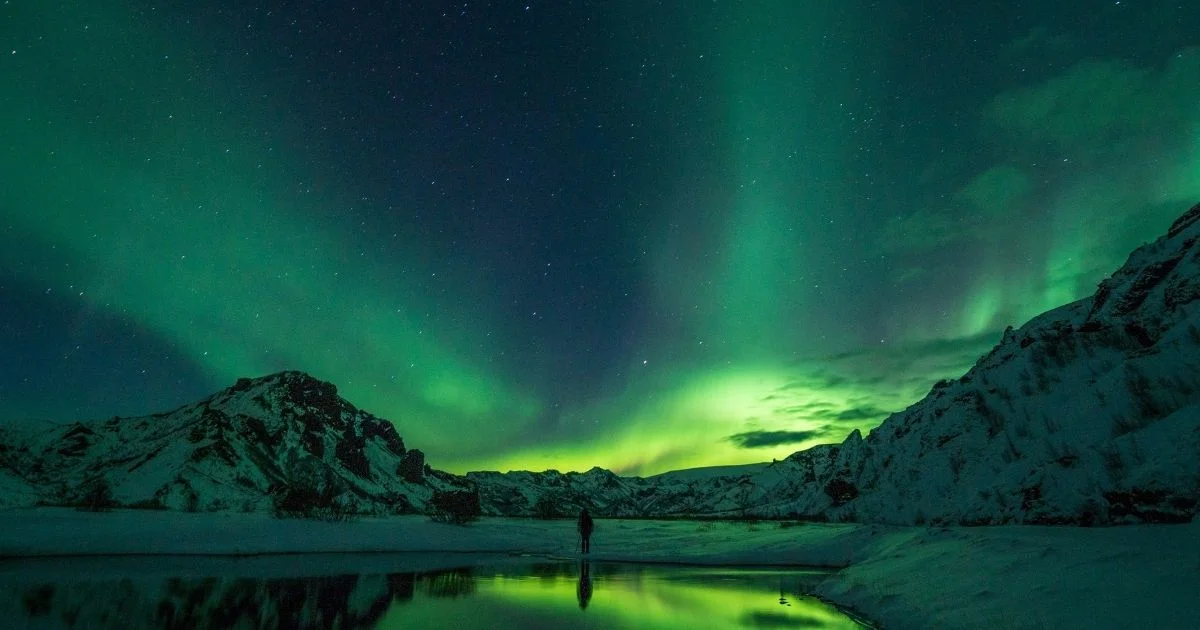
The Northern Lights, or aurora borealis, are what you see when charged particles streaming off the sun hit gases high in Earth’s atmosphere and release light. The sun sends out a steady flow of these particles, called the solar wind, and Earth’s magnetic field funnels them toward the poles. That’s why the aurora lives at high latitudes and not over your back garden at home.
The colors come from which gas gets struck and how high up. That familiar green, the one in every photograph, is oxygen lighting up around 100 km (62 miles) above the ground, according to NASA. Reds, blues and faint pinks come from oxygen and nitrogen at other altitudes. When the aurora appears as a slow green arc that ripples into curtains, you’re watching solar weather touch the top of the sky.
The northern lights are one of the great sights of the natural world, and no two nights paint the same lights in the sky. A strong display of the northern lights fills the sky, the lights dancing across it in folding curtains. Quieter aurora sightings are more common, and even then you may see the lights as a pale band on the horizon. The lights appear when the sky’s dark and the sun’s active, and they can appear at any time on a clear night in season.
When is the best time to see the Northern Lights in Iceland?
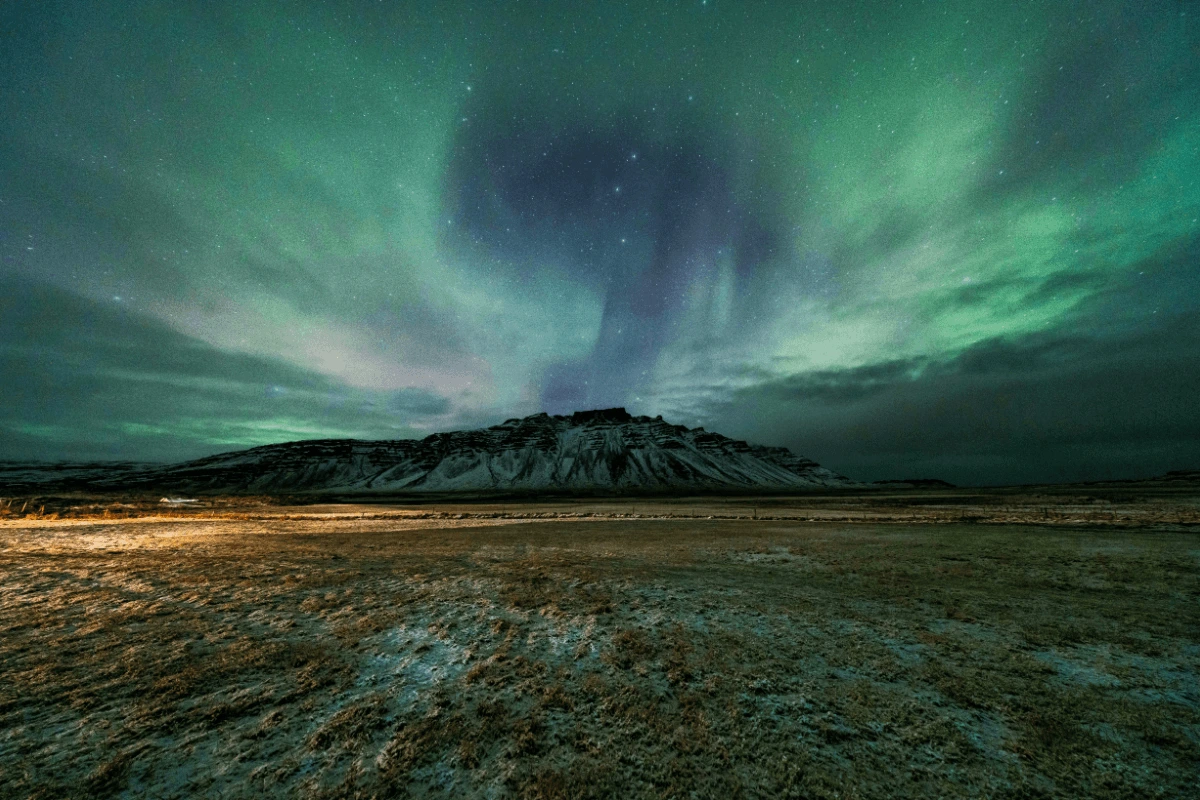
The Northern Lights are visible in Iceland through the dark half of the year, from the end of August to the end of April. The aurora’s always up there, but you can only see it against a dark sky, so the aurora season simply tracks the hours of darkness. In summer, from May through August, the long hours of daylight and the near-midnight sun keep the sky too bright, so it’s the wrong season for the aurora.
Within that window, the darkest months, roughly November through February, give you the longest nights and the most hours to wait out the weather. These are the best months if maximum darkness is your priority. The shoulder weeks on either side, September into October and March into April, trade a little darkness for milder conditions, with a small bonus: the aurora tends to run a touch stronger near the spring and autumn equinoxes, an effect documented by EarthSky as the way the sun’s and Earth’s magnetic fields line up. Any time from the end of August to the end of April can deliver.
As for the best time of day, that part’s fixed: the aurora only shows after dark, and the hours around midnight tend to be the most rewarding. So there’s no single perfect week, and any guide who names one is guessing. Whether you plan winter in Iceland for the long nights or a trip around the equinox, a longer stay beats a lucky date, because it gives the sky more chances. That’s the honest answer on the best time of year, and the best time to visit Iceland for the lights is simply more of the season, since no ideal time is written on the calendar.
What actually decides whether you see the aurora?
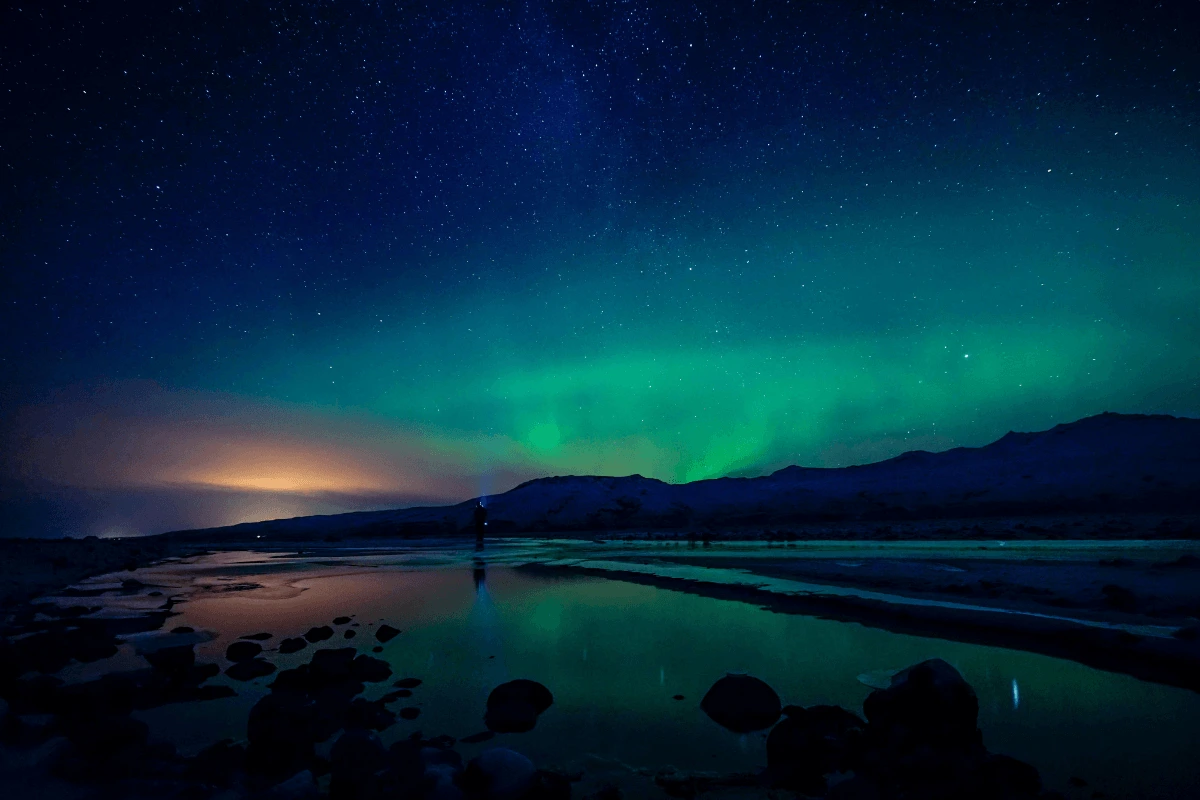
Three things decide whether the aurora shows on any given night:
- Darkness
- Clear skies
- Solar activity
Get all three conditions at once and you may see one of the best displays of your life. Miss any one and the sky stays quiet, however far you’ve traveled.
Darkness is the one you plan months ahead by choosing your season, and again each night by getting clear of the town glow. Light pollution washes the aurora out, so a faint show that vanishes over the city can be obvious an hour into the countryside.
Clear skies are the nightly wild card. Cloud cover is the real enemy of aurora viewing, because you can’t see through it, and the weather here changes fast and by the valley. Solar activity is the third lever, the strength of the aurora itself, and it rises and falls on its own schedule, which is why the lights can appear on one night and stay quiet the next. But you can read both before you head out. The Icelandic Met Office publishes an official aurora forecast that rates aurora activity on a scale of 0 to 9 and maps cloud cover across the country, white for clear, green for cloud. That northern lights forecast is the most useful page you can bookmark before a trip, and reading it well is most of the game.
How does a private trip improve your chances of seeing the aurora?
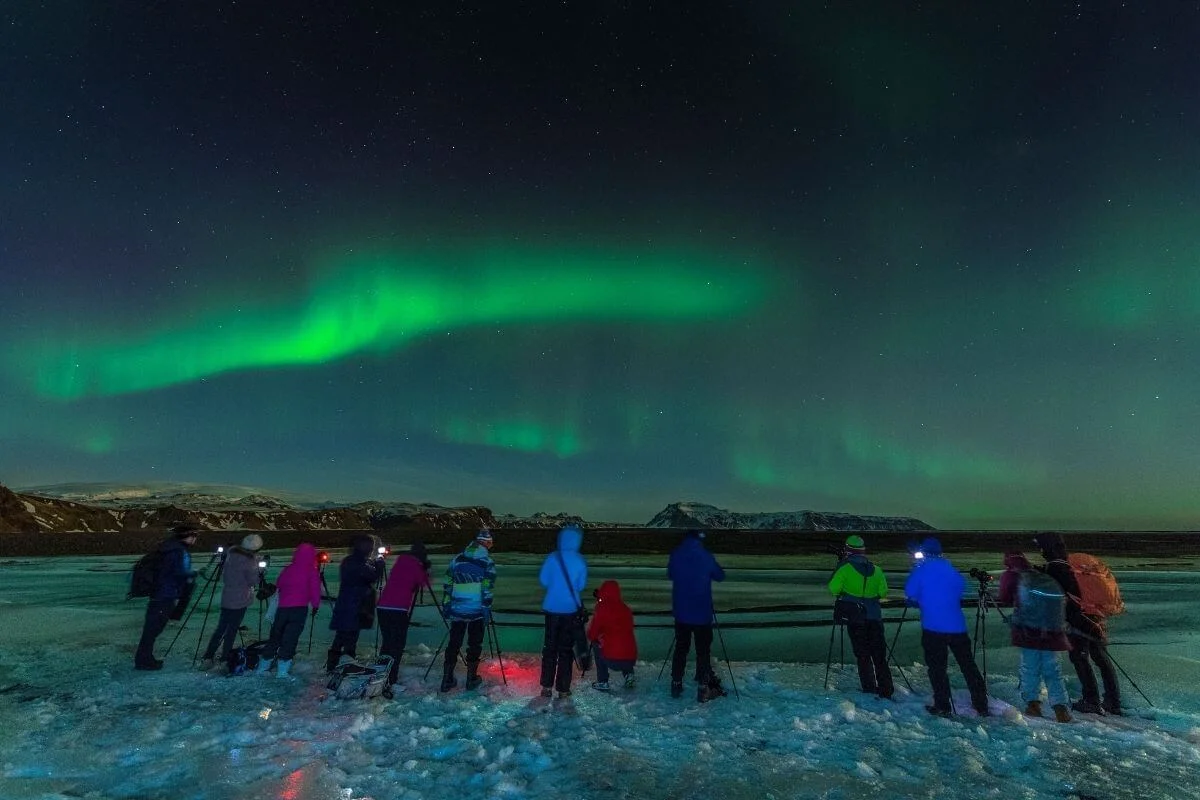
A private trip improves your odds of seeing the Northern Lights because your guide can chase the clear skies, following the forecast to wherever the sky opens. Most northern lights tours run a fixed coach route, the same place at the same time whatever the forecast says. But on a private northern lights hunt, the night bends around you, and that flexibility offers the best chance of seeing the aurora that you can actually plan for.
In practice, your guide pulls up the cloud map and the activity scale in the late afternoon, finds the hole in the weather, whether it’s a valley an hour east or a stretch of coast south, and drives you toward it in a Mercedes, a 4×4, or a super jeep built for the conditions. When the town lights fall away and the sky reads dark and open, the headlights go off and you wait together. If the cloud rolls in, you move again. Searching for the northern lights this way, moving toward the clear patch, treats the weather as information rather than fate, and it’s among the surer ways to see the aurora on the nights you have.
What a guided northern lights tour like this buys you is a better chance of seeing the northern lights on the nights you have, never a promise, which is the honest version of a hunt for the aurora borealis. Every experience is private, with no shared bus and no fixed group timetable, so the plan can change the moment the sky does. If you’re short on time, even a single private day tour can be timed to catch the northern lights on a promising night, while a longer trip gives you more chances of seeing the northern lights.
Ready to build a trip around the forecast rather than a brochure?
Build your aurora trip around the forecast with our team.
Where should you look for the Northern Lights in Iceland?
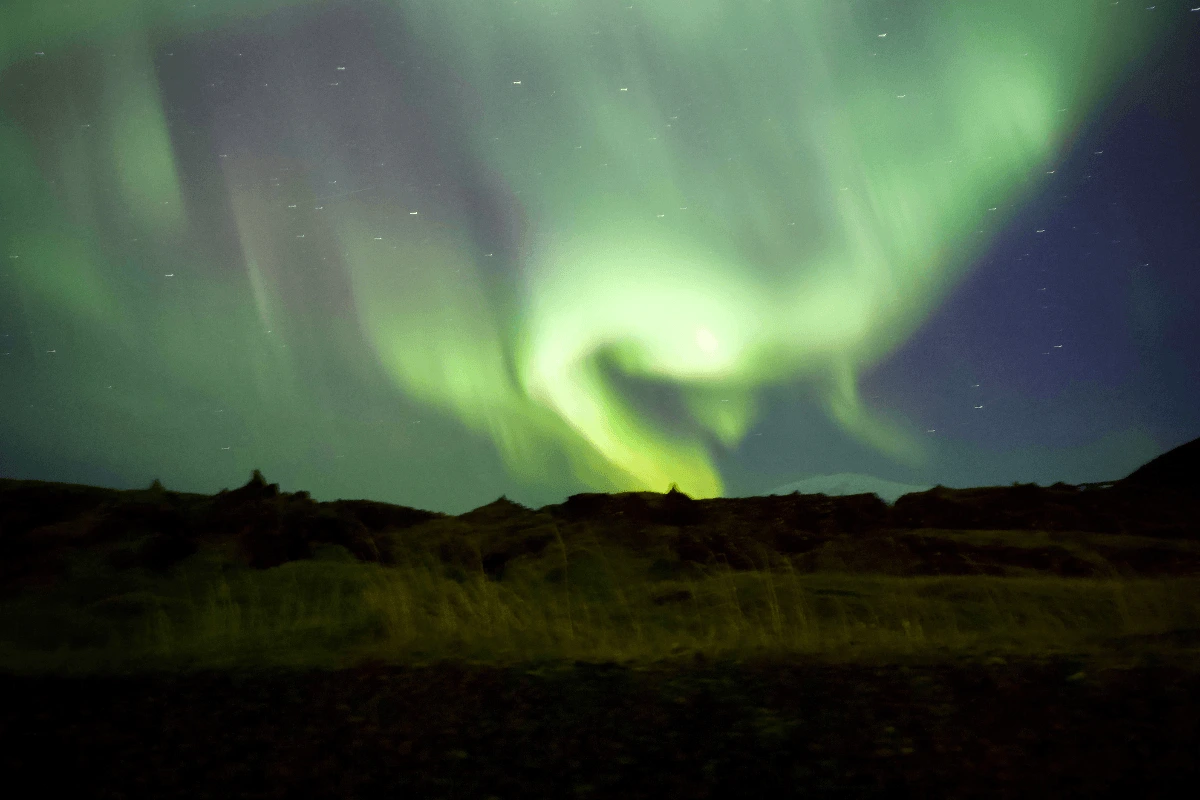
You’ll spot the aurora best away from city lights, under the widest, darkest sky you can reach. The best places to see the Northern Lights in Iceland are simply the dark ones, and much of the country qualifies once you leave a town behind. The best place to see the northern lights on any given night is wherever the cloud map shows a clear hole, so the real skill is picking a good spot for aurora under tonight’s open sky.
Stand in a lava field a half hour from anywhere on a clear night in season and the first thing you notice is the quiet. No engine, no town hum, just the wind over old rock and the cold settling on your face while you watch one patch of sky. That’s the setting the aurora deserves, and it’s a short drive from most places people stay. It’s possible to see the northern lights from many corners of the country, north Iceland and the south alike, on a dark, clear night.
A few reliably dark places to build a night of northern lights viewing around:
- Þingvellir and the Golden Circle, wide open and close to the capital, so you can go dark without going far.
- The Snæfellsnes peninsula, a dark coastline with the glacier as a backdrop.
- South Iceland along the Ring Road (Route 1), from black-sand coast to the ice at Jökulsárlón glacier lagoon, a fine place to spot the aurora borealis over water.
- The Blue Lagoon, where the water sits at 38–40°C (100–104°F). On a clear night in season you may catch the aurora from the warm pool, though a sighting is never promised.
Around Iceland in the dark months, the opportunity to see the aurora borealis in Iceland turns up almost anywhere the sky is clear, right across Iceland from coast to coast. Out in the countryside, the best northern lights hotels are simply the ones under open sky, and some will wake you if the lights come out while you sleep. Watching the northern lights here comes down to darkness and clear weather, and for all the planning, Iceland offers as honest a chance at the aurora as anywhere in the world, which is why people choose Iceland for northern lights.
How do you photograph the Northern Lights?
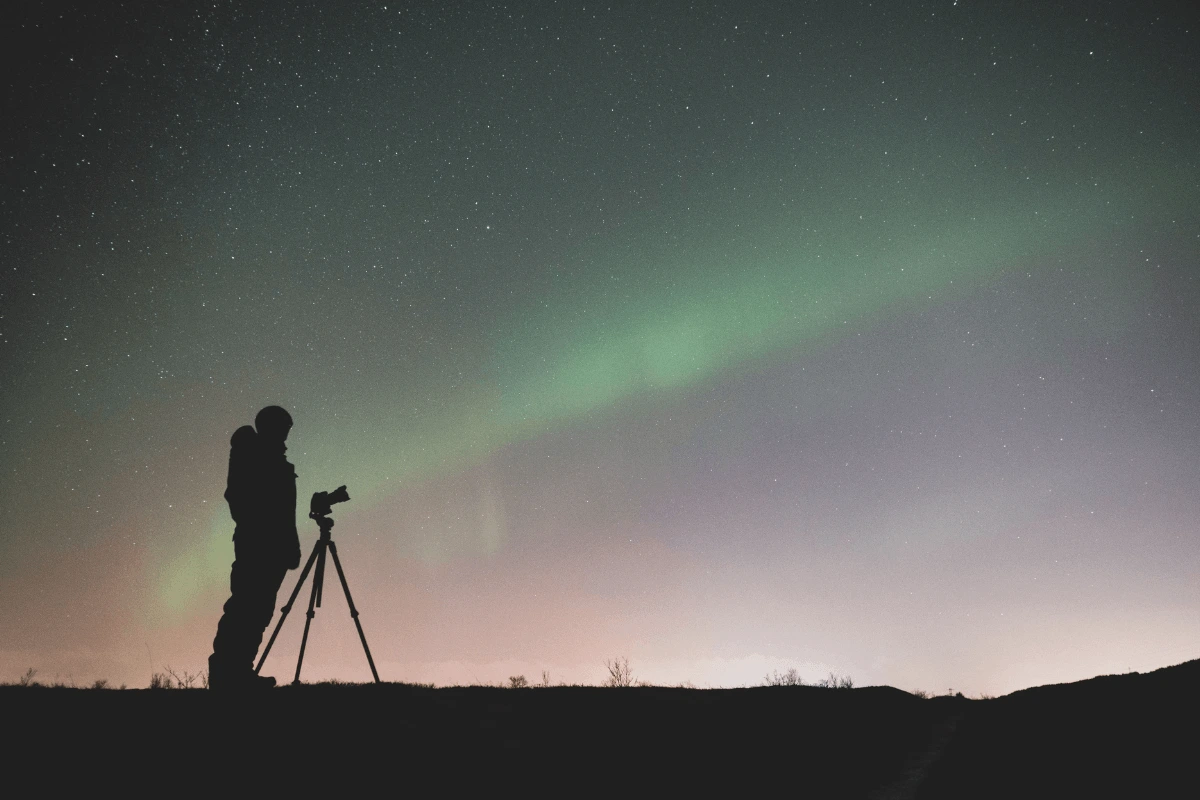
Photographing the Northern Lights takes a camera you can set by hand, a tripod to hold a long exposure steady, and patience. A phone on automatic will fight you, though recent phones with a night mode do surprisingly well if you brace them on something solid.
A simple kit that works on the night:
- A camera with manual controls, set to a wide aperture, a high ISO, and a several-second exposure.
- A sturdy tripod, because your hands can’t hold a multi-second shot still.
- Spare batteries kept warm in an inside pocket, since cold drains them fast.
- Warm, waterproof layers, because the best shows arrive once you’ve stopped moving and the cold has found you.
Focus to infinity, take a test frame, and adjust. And do look up from the screen! The camera catches color your eye can miss, but the memory you keep is the one you watched happen.
Why a scientist plans your Northern Lights trip differently
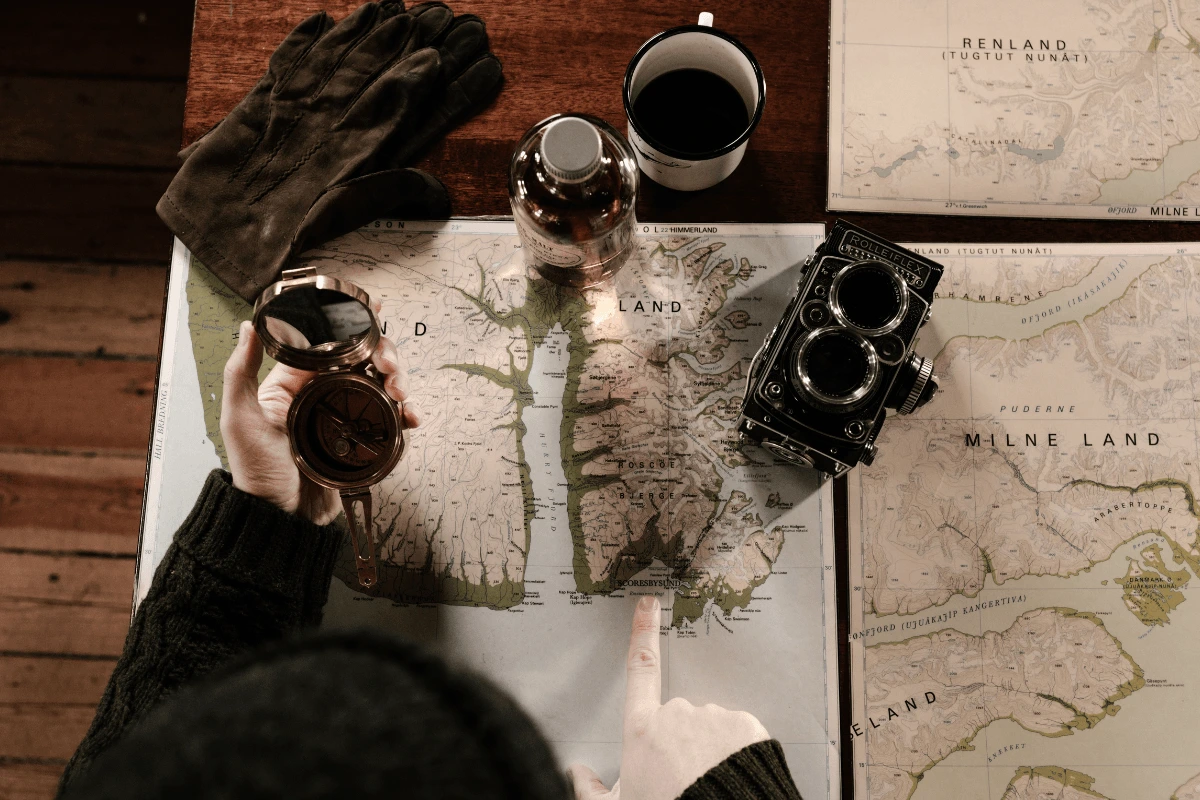
Helga Bára Bartels Jónsdóttir holds a PhD in micropaleontology, the study of past climate and ocean change read from microscopic fossils, and that training is why a Travelling Iceland trip reads the sky the way it does. She designs the itineraries and trains the guides who lead them, so the science shapes the planning of your trip, from the first map she checks to the routes she teaches her team.
That’s a different starting point from a booking desk. A geologist who’s spent a career on how this land and its weather behave plans your Iceland travel around darkness, cloud and the sun’s activity as a matter of habit, the same way she reads the geology of Iceland in a cliff face. It’s why a trip to Iceland built this way lets you experience the northern lights as something you understand, not just something you saw, and why the reviews on the live TripAdvisor page run to a 5.0 across more than 152 of them. For many guests it’s the most useful Iceland northern lights planning they’ve had, whether or not they’d visited Iceland before.
The care extends past your nights under the sky. For every booking, Travelling Iceland plants a native birch through Kolviður, the tree that once covered the island and is slowly being brought back. It’s a small, checkable thing, one tree per trip, and it stays true whether the aurora shows for you or not.
The nights you remember here are the ones where someone beside you can tell you what you’re looking at.
Book your Iceland trip direct with Travelling Iceland.
Frequently Asked Questions
How likely are you to see the Northern Lights in Iceland?
You can see northern lights in Iceland on many nights in season, from the end of August to the end of April, if you give yourself several nights and get well clear of the town glow. No single night is certain, because cloud cover and the sun’s activity change on their own schedule, so viewing the northern lights reliably comes down to time and darkness. A longer stay is your best way to improve the odds, and no one can guarantee a sighting.
Can you see the Northern Lights from the Blue Lagoon?
On a clear, dark night in season you may see the aurora from the Blue Lagoon, where the water sits at 38–40°C (100–104°F). It’s a comfortable place to watch and wait, though light around the site and the ever-present cloud mean a sighting is never promised. Treat it as a warm bonus, and keep your real aurora watching for darker ground.
Can you see the Northern Lights in Reykjavík?
You can sometimes catch the aurora in Reykjavík when the sky’s very active, but the city lights wash out all but the brightest displays. For a real look, head 20 to 40 minutes out of town to darker sky. Spotting the northern lights from the city is a bonus, and the aurora over the capital is rarely the main event.
Is Iceland or Norway better for the Northern Lights?
Both Iceland and northern Norway sit under the auroral zone and give you a real chance in the dark months, so neither is simply better. Iceland pairs the aurora with volcanic country, glaciers and geothermal water within short drives, which makes the days between clear nights worth the trip on their own. What decides it is darkness and weather on your nights, wherever you go.
What should you be careful of in Iceland?
The main thing to plan for is winter weather and road conditions, which shift quickly, so check the forecast and never rush a drive to a dark spot. Iceland is ranked the world’s safest country, and has been every year since 2008, so the country is kind to careful visitors. Glaciers and ice caves are places you visit with a qualified guide, who keeps the day both safe and interesting.
Is it okay to wear jeans in Iceland?
For daytime sightseeing jeans are fine, but for standing still under the aurora they’re a poor choice, because denim gives no warmth and gets cold the moment it’s damp. So save the jeans for the coffee shop and pack warm, waterproof layers for the night watch. You’ll be outside and barely moving, so dress warm.
Recent Comments